
Table of Contents
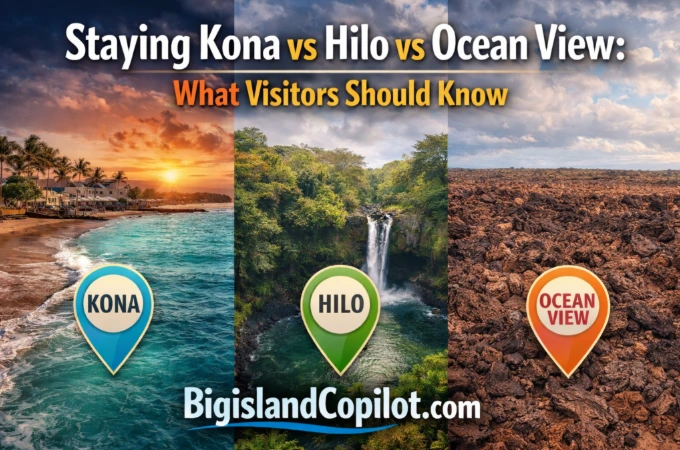
The Big Island of Hawai‘i is unique among the Hawaiian islands: it’s massive, has multiple climate zones, and each region offers vastly different experiences. Where you choose to stay can shape your trip, whether you’re after sunbathing, waterfalls, volcano hikes, stargazing, or just peace and quiet. Kona, Hilo, and Ocean View each have their pros, cons, and specialties, so let’s break them down in detail.
1. Kona: Sun, Sea, and Convenience
Weather & Climate:
Kona sits on the west coast of the Big Island and is famed for sunny, dry weather year-round. Average temperatures range from 75–85°F (24–29°C). Rain is minimal, especially compared to the eastern side of the island. Trade winds blow lightly from the northeast, often creating a gentle breeze. Kona is perfect for those who want consistent beach weather and minimal interruptions due to rain.
Activities & Attractions:
- Kealakekua Bay (Google Maps, URL: https://maps.google.com/?q=Kealakekua+Bay) – world-class snorkeling with vibrant marine life and historical significance.
- Kona Coffee Belt (Google Maps, URL: https://maps.google.com/?q=Kona+Coffee+Belt) – tour coffee farms and taste some of the world’s best coffee.
- Hapuna Beach (Google Maps, URL: https://maps.google.com/?q=Hapuna+Beach+State+Park) – long sandy beach perfect for swimming and sunbathing.
- Mauna Kea Stargazing Tours (Visitor Info, URL: https://www.ifa.hawaii.edu/info/visiting/) – experience some of the clearest skies on Earth.
Accommodations & Dining:
Kona offers the largest selection of hotels, resorts, and vacation rentals on the island. Restaurants range from casual food trucks to high-end dining. Grocery stores, gas stations, and medical facilities are readily accessible.
Pros:
- Consistently sunny weather
- Easy access to beaches, tours, and nightlife
- Modern amenities
Cons:
- More crowded, especially during peak tourist seasons
- Higher lodging prices
- Less “off-the-beaten-path” feel
2. Hilo: Lush, Rainy, and Cultural
Weather & Climate:
Hilo is on the east coast, known for its frequent rainfall and lush vegetation. Annual rainfall is among the highest in the state. Average temperatures range from 70–82°F (21–28°C). The rain creates the island’s famous waterfalls and dense rainforest. This region is perfect for nature enthusiasts and travelers who enjoy cooler, tropical weather.
Activities & Attractions:
- Akaka Falls State Park (Google Maps, URL: https://maps.google.com/?q=Akaka+Falls+State+Park) – a short hike leads to dramatic 442-foot waterfalls.
- Rainbow Falls (Google Maps, URL: https://maps.google.com/?q=Rainbow+Falls+Hilo) – a picturesque waterfall with rainbow opportunities on sunny mornings.
- Hilo Farmers Market (Google Maps, URL: https://maps.google.com/?q=Hilo+Farmers+Market) – shop fresh produce, local crafts, and souvenirs.
- Hawai‘i Volcanoes National Park (Google Maps, URL: https://maps.google.com/?q=Hawai’i+Volcanoes+National+Park) – closer than Kona, with active lava flows, hiking trails, and unique volcanic landscapes.
Accommodations & Dining:
Hilo has fewer hotels and resorts compared to Kona, with most visitors choosing B&Bs, local inns, or vacation rentals. Dining is focused on local cuisine, with fewer chains and more authentic Hawaiian experiences.
Pros:
- Lush scenery and rainforests
- Closer to volcanoes
- Less crowded than Kona
- Authentic local culture
Cons:
- Frequent rain can disrupt outdoor plans
- Limited nightlife and entertainment
- Fewer shopping options
3. Ocean View: Remote, Peaceful, and Adventure-Focused
Weather & Climate:
Ocean View is located in the southern Ka‘u district, characterized by dry, sunny conditions most of the year. Temperatures range from 75–90°F (24–32°C). This area is less developed and offers a rugged, natural Hawaii experience.
Activities & Attractions:
- Papakōlea Green Sand Beach (Google Maps, URL: https://maps.google.com/?q=Papakōlea+Green+Sand+Beach) – one of the few green sand beaches in the world, reached via a scenic hike.
- Lava fields exploration – experience Hawaii’s volcanic terrain firsthand.
- Stargazing – dark skies make this area perfect for night sky viewing.
- Peaceful beaches and remote hiking trails – ideal for travelers seeking solitude.
Accommodations & Dining:
Expect very limited hotels and restaurants. Most visitors stay in vacation rentals or small inns. It’s recommended to plan meals and supplies in advance, as grocery stores and medical facilities are further away.
Pros:
- Secluded, quiet, and scenic
- Excellent for stargazing and adventure
- Budget-friendly
Cons:
- Limited amenities and services
- Long drives to major attractions
- Fewer guided tours and organized activities
5. Tips for Choosing Where to Stay
- If you want sun, beaches, and convenience: Kona is best
- If you love waterfalls, rainforests, and local culture: Hilo is ideal
- If you want peace, stargazing, and adventure: Ocean View is your spot
Quick Planning Tips:
- Always check weather forecasts for the area you plan to stay.
- Reserve accommodations early during peak seasons.
- Factor in driving distances; the Big Island is large, and travel times between regions can be significant.
Useful Links for All Visitors:
Aloha, did you like this page?