
Table of Contents
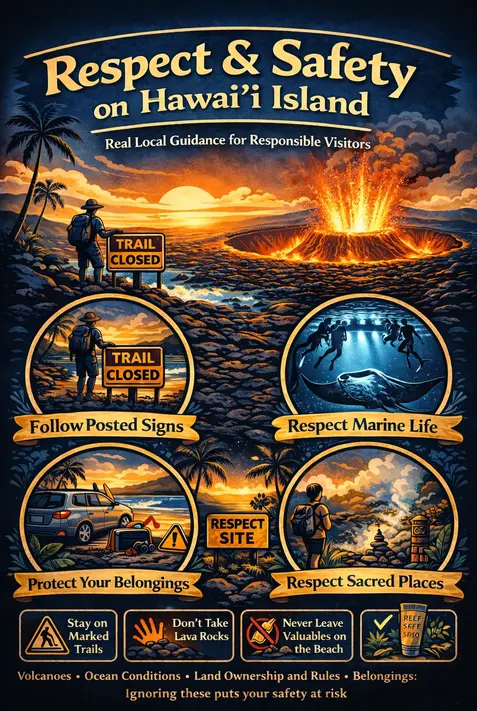
Real Local Guidance for Visiting Responsibly
Hawaiʻi Island is not a theme park. It’s a living place with active geology, protected marine life, and communities that feel the impact of tourism every day. Respect and safety go hand-in-hand here — ignoring one often puts the other at risk.
This page covers the things visitors most often misunderstand, overlook, or learn too late.
Volcano Respect & Safety
Active Does Not Mean Safe
Kīlauea and Mauna Loa are among the most active volcanoes on Earth. Even when there’s no eruption:
- Ground can collapse without warning
- Volcanic gases (especially SO₂) can spike suddenly
- Lava fields remain dangerously hot beneath the surface
Stay on marked trails and viewing areas. Closures exist for a reason — not for crowd control.
Lava Is Not a Souvenir
Removing lava rock is illegal in Hawaiʻi Volcanoes National Park and widely considered disrespectful elsewhere.
Beyond cultural reasons, lava fields are:
- Ecologically fragile
- Sharp and unstable
- Often privately owned land
Take photos, not pieces.
Respect Cultural and Sacred Areas
Many volcanic landscapes are culturally significant. If you see:
- Offerings
- Ti leaves
- Stacked stones not marked as trails
Do not touch or move them. Even well-intended interference is harmful.
Ocean & Marine Life Safety
Manta Rays Are Wild Animals
During night manta ray snorkels:
- Do not touch the mantas
- Do not dive down toward them
- Stay horizontal and still unless instructed
Touching mantas removes protective mucus and can cause long-term harm.
If a tour operator allows grabbing, chasing, or riding mantas — that’s a red flag.
Ocean Conditions Change Fast
Even on calm nights:
- Swells can increase without warning
- Currents can shift quickly
- Weather up the coast affects Kona waters
- NEVER turn your back on the ocean.
- Lava rock on the shoreline is very wet and slippery.
Listen to your Guides. If a tour is canceled for safety, that’s a sign of professionalism — not inconvenience.
Reef-Safe Sunscreen Isn’t Optional
Many sunscreens damage coral and marine ecosystems.
Use mineral-based sunscreen only:
- Zinc oxide
- Titanium dioxide
Better yet, wear a rash guard and skip sunscreen entirely for night swims.
Wildlife & Land Respect
Do Not Feed or Approach Wildlife
This includes:
- Sea turtles (honu) – Do NOT Touch!
- Monk seals
- Nēnē (Hawaiian goose)
- Stray/homeless cats and dogs on county property. If you’re caught, it can result in a fine.
Keep at least:
- 10 feet from turtles
- 50 feet from monk seals
Feeding wildlife alters behavior and often leads to injury or euthanasia.
Private Land Is Everywhere
Much of Hawaiʻi Island is privately owned, even when it looks undeveloped.
No gates doesn’t mean public access.
No signs doesn’t mean permission.
Trespassing is one of the fastest ways visitors get into serious trouble here.
Driving & Personal Safety
Night Driving Is Different Here
- Roads may be unlit, poorly marked
- Livestock and 🐑 Mouflon Sheep can wander onto highways
- Fog appears suddenly at elevation
Drive slower than you think you need to — especially in unfamiliar areas.
*Remember, you are a visitor in a land where people live daily lives using the same 2-lane road around the island. If someone is driving faster than you, or if you see a line of cars behind you, show some local Aloha and find a place to pull off as soon as possible, and let them pass to get on with their daily life.
Protect Your Belongings (Cars, Beaches, and Unattended Areas)
The Big Island is welcoming, but it is not immune to theft — especially in tourist-heavy areas. Most issues are preventable with a little awareness and planning.
Never leave valuables visible in your vehicle.
This includes backpacks, purses, camera bags, phones, wallets, and even reusable shopping bags. Smash-and-grab thefts happen quickly, often in daylight, at beach parks, trailheads, and scenic pull-offs.
At beaches, don’t leave belongings unattended.
If everyone is going in the water, bring essentials with you in a waterproof pouch or take turns staying on shore. Leaving phones, keys, and wallets on towels is one of the most common mistakes visitors make.
Rental cars are especially targeted.
They’re easy to spot. If you’re driving a rental, be extra cautious and avoid leaving anything inside — even for “just a minute.”
Trailheads and remote areas are not safer.
In fact, they’re often more isolated, giving thieves time and privacy. Lock your vehicle and keep it empty.
If you must store items in your car:
- Place them in the trunk before you arrive
- Lock the car fully
- Don’t assume “nothing will happen here”
Local rule of thumb:
If you’d be upset to lose it, don’t leave it behind.
This isn’t About fear — it’s about respecting reality and protecting your trip.
Lava Terrain Is Not Like Rock
Lava is:
- Razor sharp
- Uneven
- Easy to trip on even in daylight
Wear closed-toe shoes anytime you leave paved areas.
Before You Go: Quick Safety Checklist
- ✅ Check weather and ocean conditions the same day, not just the night before
- ✅ Bring water — dehydration happens fast at elevation
- ✅ Wear proper footwear
- ✅ Follow posted signs and closures
- ✅ Choose operators that prioritize safety over “guarantees”
- ✅ When in doubt, don’t go — Hawaiʻi Island will still be here tomorrow
A Note on Respect
Respect on Hawaiʻi Island isn’t performative — it’s practical.
When visitors:
- Follow rules
- Listen to locals
- Move slowly and intentionally
They’re safer, more welcome, and have better experiences overall.
Disclaimer
This page provides general guidance based on local conditions, public safety recommendations, and commonly misunderstood risks. Conditions on Hawaiʻi Island can change rapidly due to weather, volcanic activity, and ocean dynamics.
Always follow official guidance from:
When safety instructions conflict, err on the side of caution.
Aloha, did you like this page?