
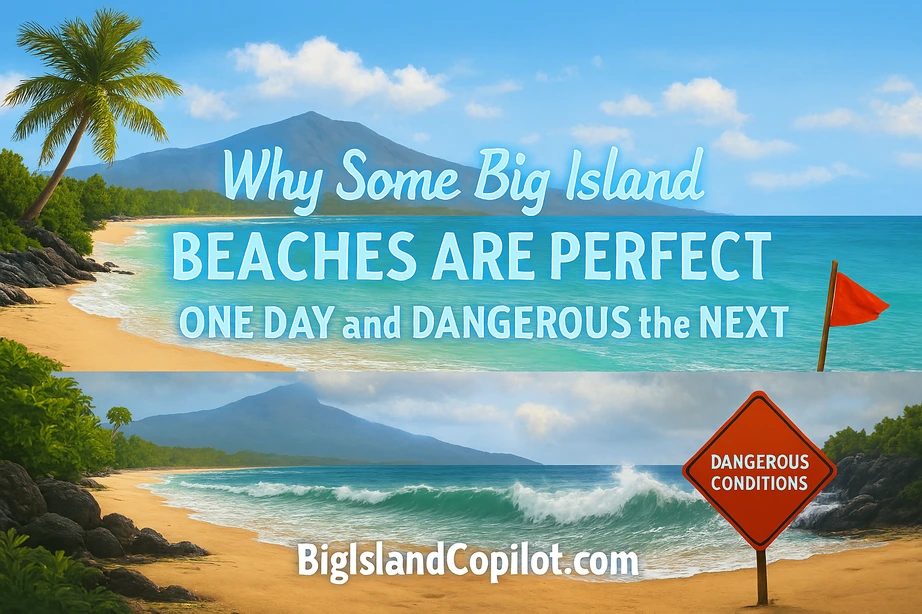
Visitors often assume beaches behave like theme parks:
once they’re “good,” they stay good.
On the Big Island, that assumption is wrong — and sometimes dangerous.
A beach that’s calm, clear, and welcoming one day can become rough, murky, or hazardous the very next morning, even when the sky is blue and the forecast looks fine.
This isn’t bad luck or exaggeration. It’s the natural result of how Hawaiʻi’s ocean, winds, tides, and coastline interact.
Understanding why Big Island beaches change is one of the most important things you can do to stay safe and actually enjoy the ocean here.
The Big Island Is Not a Typical Beach Destination
Many beaches on the mainland are sandy, shallow, and gently sloped. Conditions change slowly.
The Big Island is different:
- Much of the shoreline is lava rock, not sand
- Deep water can sit very close to shore
- Currents form around points, shelves, and channels
- Wind and swell directions matter more than size alone
This creates beaches that are highly sensitive to small environmental changes.
The Biggest Reason: Swell Direction, Not Swell Size
Most people hear “4–6 ft swell” and imagine moderate surf.
But direction matters more than height.
A beach that faces away from the swell can be calm and clear.
The same beach, when the swell shifts just a few degrees, can suddenly receive:
- Direct wave energy
- Increased surge
- Stronger nearshore currents
Nothing About the beach changed — the angle did.
That’s why a beach can look perfect one day and completely different the next, even with similar wave heights.
Wind Turns Calm Water Into Chop Faster Than You Expect
Trade winds are another major factor.
On many days:
- Mornings are calm
- Winds increase late morning or early afternoon
When wind hits open water:
- Surface chop builds
- Visibility drops
- Swimming becomes more tiring
- Exit points become unpredictable
A beach that felt relaxing at 8am can feel exhausting by noon.
This is why locals almost always go early — not because it’s cooler, but because conditions are genuinely better.
Tides Change How Waves Behave at the Shore
Tides don’t just raise or lower the water. They change how waves interact with reefs, sandbars, and lava shelves.
Incoming Tide
- Often brings clearer water
- Pushes offshore water toward shore
- Can reduce draining currents
Outgoing Tide
- Pulls water away from shore
- Can strengthen currents
- Often reduces visibility
At some Big Island beaches, outgoing tide turns gentle waves into strong surge — especially where water funnels through gaps in reef or lava.
Lava Coastlines Amplify Small Changes
Unlike sandy beaches, lava shorelines:
- Don’t absorb wave energy evenly
- Create reflection and rebound
- Funnel water through narrow exits
This means:
- Waves may surge instead of breaking smoothly
- Water can rush back unexpectedly
- Entry and exit points change with tide and swell
A calm entry one day can be a scraping, unstable exit the next.
Currents Are Invisible — Until They’re Not
One of the most dangerous misconceptions is thinking rough water looks rough.
Some of the strongest currents:
- Form in calm-looking water
- Appear as darker or smoother patches
- Sit near points, channels, or gaps
These currents can change day to day depending on:
- Tide direction
- Swell angle
- Wind strength
A swimmer who felt safe yesterday might unknowingly enter a moving conveyor belt today.
Rain Elsewhere Still Affects the Ocean Here
Even if it’s sunny at the beach:
- Rain inland can affect water quality
- Runoff can reduce visibility
- Debris and sediment can increase surge
This is especially true on the east side and after storms.
Clear skies don’t always mean clear water.
Why Forecasts Can Be Misleading
Most weather apps:
- Average conditions across large zones
- Don’t account for local geography
- Focus on wave height, not direction or period
A forecast that looks “safe” can still produce dangerous conditions at a specific beach.
This is why checking:
- Wind direction
- Swell direction
- Tide timing
is more important than a single number.
Why Locals Treat Big Island Beaches as “Day-Specific”
Locals don’t label beaches as “safe” or “dangerous” permanently.
They think in terms of:
- “Good today”
- “Not good today”
- “Only early”
- “Only if calm”
- “Only for experienced swimmers”
This mindset prevents accidents — and disappointment.
Common Warning Signs People Miss
A beach may look beautiful but still be risky.
Watch for:
- Strong sideways water movement
- Difficulty standing in shallow water
- Constant surge pushing you off balance
- Murky water after recent swell or rain
- Fewer people in the water than expected
Absence of lifeguards or swimmers is often information.
Why Photos and Social Media Are Misleading
Many visitors arrive at Big Island beaches expecting what they saw online.
But photos:
- Capture one moment
- Often taken on perfect days
- Don’t show currents, surge, or exhaustion
Conditions change hourly here. Yesterday’s Instagram post is not today’s reality.
The “Perfect Yesterday” Trap
One of the most dangerous assumptions is:
“It was great yesterday, so it’ll be fine today.”
On the Big Island, overnight changes in:
- Wind
- Swell angle
- Tide timing
can completely alter a beach by morning.
This trap catches even strong swimmers.
How to Decide If a Beach Is a Good Idea Today
Before getting in:
- Watch the water for several minutes
- Look at how waves interact with the shoreline
- Observe other swimmers — or lack of them
- Note wind direction and strength
- Consider tide direction
If anything feels off, trust that instinct.
There is no shortage of beaches.
What Makes a Beach “Safer” on Any Given Day
Generally safer conditions include:
- Light or no wind
- Small, well-aligned swell
- Incoming tide
- Clear visibility
- Predictable wave patterns
Even then, ocean conditions can change quickly.
The Ocean Isn’t Unpredictable — It’s Conditional
The ocean follows rules.
They’re just not the rules visitors expect.
Beaches don’t flip from safe to dangerous randomly. They respond to:
- Wind
- Swell
- Tide
- Geography
When you understand those variables, the changes make sense.
Why This Knowledge Matters
Most ocean incidents aren’t caused by panic or recklessness.
They’re caused by:
- Misreading conditions
- Overconfidence based on past experience
- Assuming beauty equals safety
Understanding why beaches change empowers better decisions.
Bottom Line
On the Big Island:
- No beach is permanently “safe”
- No beach is permanently “dangerous”
- Every beach is day-dependent
- Always protect your belongings
Big Island beaches that are perfect today might not be tomorrow — and that’s normal here.
If you approach the ocean with awareness instead of assumptions, you’ll:
- Stay safer
- Enjoy better conditions
- Avoid unnecessary risk
The ocean isn’t out to get you.
But Big Island beaches expect respect.
Aloha, did you like this page?