
⚠️ Big Island Safety Notice
The Big Island’s environment can change rapidly — ocean conditions, lava flows, weather, and trails may become dangerous without warning. This guide is for educational purposes only and does not replace real-time assessments, posted warnings, or professional guidance. Always check current conditions before entering the water, hiking, or exploring, and do not proceed if conditions appear unsafe — even if a location is described as “safer.”
Table of Contents
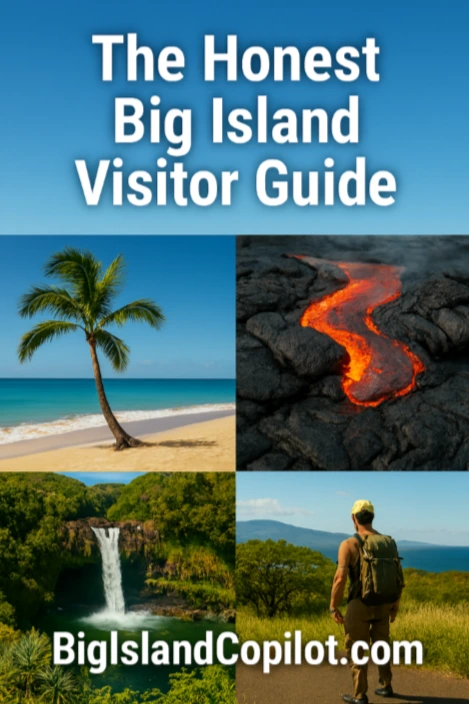
Hawaiʻi Island — the Big Island — is a place of extremes. Towering volcanoes, lush rainforests, black sand beaches, arid lava deserts, and world-class stargazing all exist within a single island. But visiting the Big Island is not like visiting other Hawaiian islands. The sheer size, diverse climates, and active geology create unique challenges and incredible rewards for travelers.
This Big Island visitor guide tells you what first-time and repeat visitors need to know: how to plan realistically, stay safe, and experience the island’s magic without the common pitfalls.
1. Understanding the Island’s Geography
The Big Island is massive — roughly 4,028 square miles, making it twice the size of all the other Hawaiian islands combined. Its geography includes:
- Volcanoes: Mauna Loa, Mauna Kea, Kīlauea
- Rainforests: Hilo side receives heavy rainfall, waterfalls abound
- Beaches: Kona side is dry and sunny, black and green sand beaches are unique
- High elevation zones: Mauna Kea summit is cold and windy, even snowy sometimes
Why This Matters
Traveling between regions can take hours. Trying to see everything in one day is a mistake. Instead, plan regional clusters: Kona & South, Hilo & East, North & Kohala.
2. Volcanoes and Lava: Respect the Power
The Big Island is the only U.S. island with active lava flows. Volcanoes shape landscapes, climate, and local communities.
Key points for visitors:
- Lava viewing is rare and regulated (Internal link: Why Lava Viewing Is Rare — and Why That’s Actually a Good Thing)
- Volcanic gas (VOG) can affect air quality (Internal link: Volcanic Gas (VOG): When It’s Dangerous and When It’s Just an Inconvenience)
- Ground deformation and eruptions are carefully monitored (Internal link: Volcano Forecasting in Hawaiʻi)
Honest tip: Don’t expect to “see lava everywhere.” Planning around safe viewing areas is essential.
3. Weather Can Be Extreme and Varied
- Hilo side: wet, lush, frequent showers
- Kona side: sunny, dry, ideal for beaches
- Mauna Kea & high elevations: cold, windy, thin air
- Volcanoes National Park: microclimates vary within minutes
Pack for layers and be ready for sudden changes. Rain gear, sturdy shoes, sunscreen, and hydration are essential.
4. Transportation Realities (Why Rental Cars Cause So Many Problems)
Transportation on Hawaiʻi Island is not optional, and it’s one of the most misunderstood parts of visiting the Big Island.
The island is massive, public transportation is limited, and rideshare services are inconsistent outside of Kona and Hilo.
Why Standard Rental Cars Often Disappoint Visitors
Many first-time visitors book the cheapest or largest vehicle available, assuming bigger is better. On the Big Island, that assumption often backfires.
Common issues include:
- Long waits at airport rental counters, especially in Kona
- Cars with high mileage and island wear
- Restrictions on where you’re allowed to drive
- Low-clearance vehicles struggling on uneven roads
- Oversized vehicles that are difficult to maneuver
Many rental contracts prohibit driving on certain roads, including:
- Unpaved or rural access roads
- Some South Kona and Kohala routes
- Roads near lava fields and remote trailheads
Violating these rules can void insurance coverage — something visitors often discover after a problem occurs.
The Big Island Is Hard on Vehicles — and Drivers
The Big Island’s driving conditions include:
- Narrow roads and tight shoulders
- Steep grades and sudden elevation changes
- One-lane bridges
- Sharp lava rock edges near roads
- Fog, rain, wind, and sudden visibility changes
These conditions require attention and confidence, not just horsepower.
Bigger Is Not Better: Drive What You’re Comfortable With
This is one of the most overlooked travel mistakes.
Every year, visitors rent large SUVs or Suburbans thinking they’ll be safer or more capable — then struggle to:
- Stay centered on narrow roads
- Navigate tight parking areas
- Handle one-lane bridges
- Judge distances on winding coastal routes
When drivers aren’t comfortable with their vehicle:
- Stress levels rise
- Reaction times slow
- Minor mistakes become major issues
Locals see this constantly — visitors gripping the wheel, driving far under the speed limit, stopping unexpectedly, or pulling halfway off the road because the vehicle feels overwhelming. Roads are narrower than you expect, and so are the parking stalls and parking lots.
A vehicle you drive confidently is safer than a larger one you don’t.
Why Many Visitors Choose Turo Instead
Because of these realities, many travelers now use Turo instead of traditional rental companies.
Turo allows visitors to:
- Choose a vehicle that matches their actual driving comfort level
- Avoid oversized vehicles they don’t need
- Rent from locals who understand island conditions
- Skip long airport rental lines
Local hosts often explain:
- Which roads are reasonable
- Where larger vehicles become a liability
- What to expect in rain, fog, or lava-adjacent areas
That local insight can prevent a lot of unnecessary stress. Pickup and drop-off can be an issue if the host doesn’t deliver the car to you.
What to Consider When Choosing Any Rental Vehicle
Instead of asking “What’s the biggest or cheapest option?”, ask:
- Am I comfortable driving this size vehicle on narrow roads?
- Can I easily park this vehicle in town and at trailheads?
- Do I need clearance — or just reliability?
- Will I be relaxed or tense behind the wheel?
For most visitors:
- A compact or mid-size SUV is ideal
- Good tires and brakes matter more than size
- Familiar handling beats power or bulk
The Big Island isn’t an off-road park; 4x4s and clearance are overkill for 99% of visitors, since your entire time will be spent on paved/graveled roads. Plus, even if you rent a 4×4, it will probably be banned from going off-road or on 4×4 needed excursions like the Mauna Kea summit.
A Final Honest Transportation Tip
If driving feels stressful, everything else on your trip will too.
Choosing a vehicle you’re comfortable driving:
- Reduces anxiety
- Improves safety
- Makes long drives enjoyable
- Prevents avoidable mishaps
Whether you use a traditional rental or Turo, pick a vehicle that fits you — not one that looks impressive in photos.
That single decision can dramatically improve your Big Island experience.
5. Cultural Respect and Etiquette (Why It Truly Matters on Hawaiʻi Island)
Hawaiʻi Island is not just a vacation destination — it is a living place with deep cultural roots, sacred traditions, and ongoing connections between people and land. Visitors who understand this tend to have richer, more meaningful experiences and far fewer negative encounters.
Cultural respect here isn’t about memorizing rules. It’s about awareness, humility, and intention.
Hawaiʻi Is Not Just “Paradise” — It Is Home
For many visitors, Hawaiʻi is a once-in-a-lifetime trip. For residents, it is home — a place tied to ancestry, language, land, and identity.
This difference in perspective matters.
Behaviors that feel harmless to visitors — wandering off trails, collecting rocks, entering restricted areas — can be deeply disrespectful and, in many cases, illegal.
Understanding that the land (ʻāina) is considered alive and sacred in Hawaiian culture helps explain why boundaries are taken seriously.
Respect Sacred and Cultural Sites
Throughout the Big Island, you’ll encounter:
- Heiau (ancient Hawaiian temples)
- Petroglyph fields
- Burial sites
- Culturally significant landscapes
These are not tourist attractions in the traditional sense.
What to do:
- Observe from a distance
- Follow posted signs
- Stay on marked paths
- Keep voices low
What not to do:
- Climb on structures or stones
- Move rocks or artifacts
- Take photos where signage prohibits it
- Treat sites as backdrops for social media content
If a site feels quiet, solemn, or powerful — it probably is.
Do Not Take Rocks, Sand, Coral, or “Souvenirs”
This is one of the most common — and most serious — mistakes visitors make.
Removing:
- Lava rocks
- Black, green, or red sand
- Coral or shells
- Fossils or minerals
is illegal in many areas and culturally offensive everywhere.
Beyond legality, many locals view removing natural items as disrupting balance — something that brings emotional weight, not superstition.
Honest advice:
If you want a souvenir, support local artists or shops. Leave the land exactly as you found it.
Follow Kapu and Posted Restrictions Without Debate
You will see signs marking areas as:
- Closed
- Restricted
- Kapu (forbidden or sacred)
These are not suggestions.
Some closures are about:
- Cultural protection
- Safety
- Environmental recovery
- Active geological hazards
Ignoring them can:
- Endanger you
- Harm sensitive areas
- Damage trust between visitors and residents
If you’re unsure whether access is allowed, assume it is not.
Learn a Little Language — It Goes a Long Way
You don’t need to speak Hawaiian fluently, but learning a few basics shows respect:
- Aloha – hello, goodbye, love, compassion
- Mahalo – thank you
- ʻĀina – land
- Kapu – sacred / restricted
Pronunciation matters. Take a moment to listen and try — effort is appreciated far more than perfection.
Be Mindful in Everyday Interactions
Cultural respect isn’t limited to sacred sites.
It also shows up in:
- Driving patiently
- Letting locals merge
- Being kind to service workers
- Not treating people as “part of the experience”
Avoid:
- Loud, entitled behavior
- Dismissing local concerns
- Comparing Hawaiʻi negatively to the mainland
Respectful visitors are remembered — and often welcomed back warmly.
Social Media and Photography Awareness
The Big Island is incredibly photogenic, but not everything is meant to be content.
Before posting:
- Ask yourself if the image shows someone’s home, sacred place, or private land
- Avoid geotagging sensitive or restricted locations
- Never encourage dangerous or illegal behavior for photos
What looks like “adventure” online can create real-world harm.
Why Cultural Respect Improves Your Experience
Visitors who approach Hawaiʻi with humility often:
- Have better conversations with locals
- Receive helpful advice and recommendations
- Feel more connected to the places they visit
- Leave with understanding, not just photos
Respect opens doors that guidebooks can’t.
A Simple Rule to Remember
If you wouldn’t do it:
- In someone’s home
- At a place of worship
- Or on land that isn’t yours
Don’t do it here.
Key Takeaways on Cultural Respect
Small acts of respect create meaningful experiences. These places enhance your experience and show respect.
Hawaiʻi Island is a living, sacred place — not a theme park
Sacred sites deserve quiet observation, not interaction
Never remove natural or cultural items
Follow all posted signs and kapu areas
6. Wildlife and Environment Awareness
The Big Island is home to unique flora and fauna, including endangered species and fragile ecosystems:
- Stay on trails to protect native plants
- Avoid disturbing seabird nesting areas
- Don’t feed feral animals (feral pigs and chickens are common)
- Observe marine life responsibly — especially turtles, monk seals, and coral reefs
This is not just ethical; it’s required by law in many areas.
7. First-Time Visitor Planning Tips
- Do your research: Know which regions you’ll visit, the best times of day, and entry restrictions
- Book tours thoughtfully: Helicopters, snorkel trips, and volcano hikes need advanced planning
- Pack smart: Include layers, water, sunscreen, snacks, sturdy shoes, and masks if vog is present
- Allow flexibility: Lava flows, weather, or road closures may change plans suddenly
8. Money Matters and Local Realities
- The Big Island is more expensive than the mainland in groceries, fuel, dining, etc.
- Many restaurants close early or are seasonal
- Tipping is standard in service industries (15–20%)
- ATMs are less frequent in rural areas
Planning ahead avoids frustration and ensures you have cash or card options for remote areas.
9. Health and Safety Considerations
- Vog and air quality: Sensitive individuals should monitor daily reports
- Hiking and outdoor exertion: Bring water, sunscreen, and know your limits
- Ocean hazards: Rip currents, sudden drop-offs, and sharp lava rocks are common
- High elevation: Mauna Kea can cause altitude sickness; ascend slowly and hydrate
10. The Honest Truth About “Tourist Expectations”
Many first-time visitors come with a vision of:
- Endless beaches
- Seeing lava everywhere
- Perfect weather
The Big Island doesn’t always match these expectations — but that’s the point. Its real charm is in contrast, adventure, and discovery. Travelers who embrace:
- Diversity of climates
- Slow, intentional exploration
- Cultural and natural respect
…often leave with the most memorable experiences.
11. Key Takeaways
- The Big Island is massive and geographically diverse — plan realistically
- Volcanoes, lava flows, and VOG are real, present, and sometimes limiting
- Roads, weather, and travel times are challenging — prepare accordingly
- Respect culture, environment, and wildlife
- Flexibility, layered clothing, and research are your best tools
- First-time visitors who slow down enjoy the island far more than those who rush
⚠️ Quick Safety Reminder
Conditions can change suddenly. Always check local conditions, warnings, and official guidance before entering the ocean, lava areas, or trails. Safety is your responsibility.
Related: How to Experience the Big Island Without Regret
Aloha, did you like this page?