
⚠️ Big Island Safety Notice
The Big Island’s environment can change rapidly — ocean conditions, lava flows, weather, and trails may become dangerous without warning. These Guides are for educational purposes only and do not replace real-time assessments, posted warnings, or professional guidance. Always check current conditions before entering the water, hiking, or exploring, and do not proceed if conditions appear unsafe — even if a location is described as “safer.”
Table of Contents
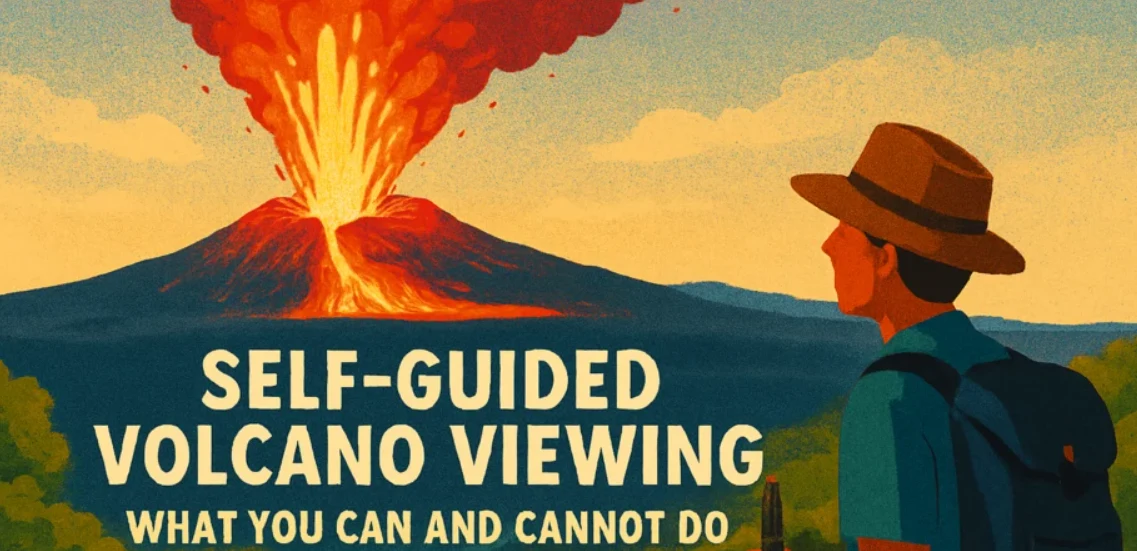
Hawaiʻi Island offers some of the world’s most spectacular volcanic landscapes, from glowing lava flows to steaming vents and dramatic crater rims. For many visitors, a self-guided volcano experience is appealing—it allows flexibility, independence, and a pace that matches your interests.
However, volcanoes are unpredictable and dangerous. Many accidents happen to people who assumed they were “just looking” or following others. This guide explains what you can safely do, what is off-limits, and how to use maps and official resources to plan a responsible self-guided visit.
Why Caution Is Critical
The Big Island’s volcanic terrain is unique:
- Lava flows constantly reshape the landscape.
- Crust over molten lava may appear solid but can collapse.
- Sulfur dioxide and other volcanic gases can accumulate quickly.
- Trails may be unmarked, unstable, or hidden behind lava features.
- Weather changes rapidly, creating flash floods, fog, and slippery conditions.
Visitors often underestimate these hazards. Following rules, signs, and local guidance is not optional—it’s the difference between an unforgettable experience and a serious accident.
What You Can Do: Safe, Legal Options
1. Hawaiʻi Volcanoes National Park
The park is the safest and most informative place to self-guide. Trails and lookout points are clearly marked, and most are monitored.
Popular self-guided spots include:
| Area | Description | Map & Info |
|---|---|---|
| Kīlauea Overlook Points | Safe viewpoints for observing active craters and lava flows. | Map & Info |
| Sulfur Banks Trail | Short walk along steaming vents and mineral deposits. | Trail Info |
| Thurston Lava Tube | Walk inside a cooled lava tube for a unique underground experience. | Trail Info |
| Chain of Craters Road | Scenic drive ending near the coast with lava viewing points. | Map |
Tip: Always stay on marked trails and look for posted closures or hazard signs.
2. Use Publicly Accessible Roads
- Only pull off at designated parking areas.
- Do not drive onto lava flows or unmarked trails.
- Private property and restricted areas are illegal to enter and dangerous.
Official County Volcano Info: Hawaiʻi County Volcanic Activity ( https://www.hawaiicounty.gov/volcano)
3. Bring Tools for Observation
- Binoculars: Observe lava flows and craters safely from a distance.
- Drones: Follow FAA rules; do not fly over people, park boundaries, or restricted areas.
FAA Drone Guidelines: FAA UAS Guidelines (https://www.faa.gov/uas/)
4. Plan Around Daylight
- Lava viewing is safer in daylight to navigate uneven terrain.
- Nighttime can provide dramatic visuals but requires flashlights, knowledge of terrain, and extra caution.
What You Cannot Do: Dangerous or Illegal Activities
1. Cross Fresh Lava Flows
- Extremely hot and unstable, even if they look solid.
- Collapsing crust exposes molten lava.
- Crossing is illegal in most areas and life-threatening.
2. Enter “No Entry” Zones
- Areas closed due to active flows, hazardous gas, or unstable ground.
- Ignoring closures can result in fines or arrest.
- National Park Alerts: Current Park Alerts (https://www.nps.gov/havo/planyourvisit/alerts.htm)
3. Touch Lava or Steam Vents
- Even cooled lava retains heat capable of causing burns.
- Steam vents release gases that can harm lungs or skin.
4. Go Off-Trail
- Unmarked lava terrain is extremely dangerous: falls, hidden cracks, or loose rock are common.
Family-Friendly Self-Guided Options
- Sulfur Banks Trail: Flat, short, educational for kids.
- Thurston Lava Tube: Safe, fun, and shaded walk inside cooled lava.
- Visitor Center Exhibits: Interactive learning About volcanology and safety.
Avoid longer hikes near active lava with children or inexperienced hikers.
Cultural Considerations
- Many volcanic areas are sacred.
- Avoid climbing, taking rocks, or disturbing natural features.
- Kapu (restricted) areas should always be respected.
Maps and Interactive Resources
Here are recommended resources with clickable links and printed URLs:
| Resource | Description | Link (Clickable & Printed) |
|---|---|---|
| USGS Hawaiian Volcano Observatory | Real-time lava maps, gas alerts | HVO (https://volcanoes.usgs.gov/observatories/hvo/) |
| Hawaiʻi County Volcano Updates | Local alerts, closures, and hazard info | Hawaiʻi County (https://www.hawaiicounty.gov/volcano) |
| NPS Park Maps | Trails, overlooks, parking | NPS Maps (https://www.nps.gov/havo/planyourvisit/maps.htm) |
| Park Alerts | Temporary closures, hazards | Park Alerts (https://www.nps.gov/havo/planyourvisit/alerts.htm) |
| FAA Drone Guidelines | Rules for aerial observation | FAA (https://www.faa.gov/uas/) |
Practical Safety Tips
- Check conditions before leaving: Lava flow paths, road closures, and weather.
- Bring essentials: Water, snacks, sturdy shoes, flashlight/headlamp, hat, sunscreen.
- Avoid solo trips: Having a companion increases safety.
- Leave your itinerary: Tell someone where you are going and expected return.
- Watch the weather: Fog, rain, and heat can become hazards quickly.
Why Tours Can Still Be Safer
Even if self-guiding is appealing, guided tours provide:
- Up-to-date knowledge of flows and hazards
- Monitored and legal access points
- Expertise in reading lava terrain
- Safer night-viewing setups
However, self-guided trips can be done safely if rules and signage are followed carefully.
Final Takeaways
- Respect closures and signs: They exist for a reason.
- Stay on trails and roads: Lava and cliffs are unstable.
- Be prepared: Plan, bring supplies, and check conditions.
- Be culturally mindful: Sacred sites and natural features are protected.
- Remember conditions change fast: Yesterday’s safe path may be dangerous today.
By combining preparation, respect, and awareness, a self-guided volcano experience can be both thrilling and safe. Keep these principles in mind, and your visit to Hawaiʻi Island’s volcanic landscapes will be memorable for all the right reasons.
⚠️ Quick Safety Reminder
Conditions can change suddenly. Always check local conditions, warnings, and official guidance before entering the ocean, lava areas, or trails. Safety is your responsibility.
Aloha, did you like this page?