
⚠️ Big Island Safety Notice
The Big Island’s environment can change rapidly — ocean conditions, lava flows, weather, and trails may become dangerous without warning. This guide is for educational purposes only and does not replace real-time assessments, posted warnings, or professional guidance. Always check current conditions before entering the water, hiking, or exploring, and do not proceed if conditions appear unsafe — even if a location is described as “safer.”
Table of Contents
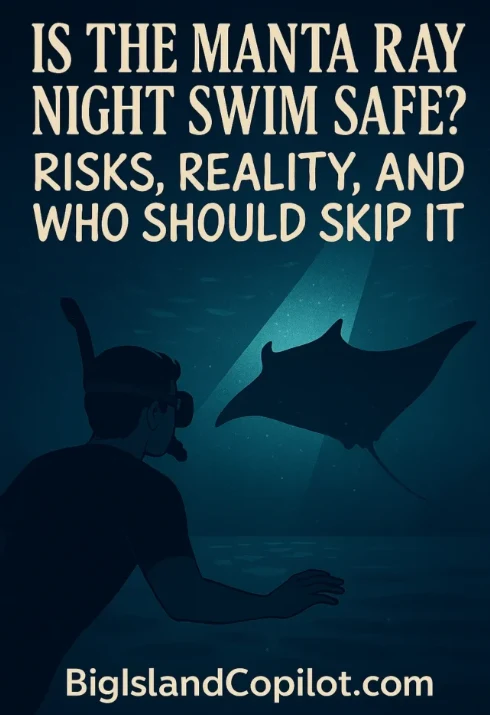
A Manta Ray night swim off the Kona coast on the Big Island is an experience that draws visitors from around the world. Bioluminescent trails, gentle giants gliding through the water, and an unforgettable underwater ballet make it iconic.
But like all bucket-list activities, it comes with questions: Is it safe? What are the real risks? Who should consider skipping it? This guide answers all of these in detail, giving you everything you need to make an informed decision.
What to Expect on a Manta Ray Night Swim
- Typically occurs off Kona’s western coast, where the water is calm and nutrient-rich.
https://maps.google.com/?q=Kona+Coast+Manta+Ray+Sites - Tours use boats equipped with lights to attract plankton, the manta rays’ food.
- Visitors enter the water with a guide, often with masks, snorkels, and sometimes wetsuits.
- Manta rays are non-aggressive and curious, circling divers but never hunting them.
This experience is structured and guided, making safety a priority.
The Real Risks
1. Water and Ocean Conditions
- Waves and currents can surprise even calm-seeming areas.
- Tours are canceled if conditions are unsafe.
- Ocean depth varies; falling off the boat into shallow areas can cause injury.
2. Physical Strain
- Snorkeling requires basic swimming skill.
- Treading water for 45–60 minutes can be tiring.
- Cold water or prolonged exposure may lead to discomfort.
3. Marine Hazards
- A Manta ray night swim poses no threat.
- Occasional jellyfish, sea urchins, and coral cuts are possible.
- Boat decks and ladders can be slippery.
- Wind can lower your body temperature after exiting the water.
4. Medical Considerations
- Pregnant individuals should consult a doctor.
- People with heart conditions or respiratory issues may find it strenuous.
- Children under a certain age or non-swimmers should only participate if explicitly allowed by the tour operator.
Who Should Skip The Manta Ray Night Swim?
- Non-swimmers or weak swimmers: The swim requires being comfortable in open water for up to an hour, often at night.
- Individuals with severe seasickness: Even calm nights can produce motion that triggers nausea.
- Pregnant women without doctor clearance: The physical effort, night conditions, and motion of the boat may pose risks.
- People with serious heart, lung, or mobility conditions: Treading water and navigating boat entry/exit can be strenuous.
- Children under age restrictions: Operators set minimum age limits for safety and comfort.
- Anyone uncomfortable in dark or open water: Night swims are low-visibility, and mental comfort is essential.
Additional Considerations
- Those with anxiety or panic triggers in water: Even experienced swimmers can feel overwhelmed by manta proximity at night.
- Recent injuries or surgeries: Entering the water or climbing ladders may exacerbate injuries.
- People on certain medications: Sedatives or blood pressure medications can affect swimming ability or response to cold water.
Remember: Safety is not just About physical risk; it includes your ability to remain calm, alert, and responsive. If you fall into any of these categories, it is better to choose alternatives, such as a boat-based manta viewing tour or daytime snorkeling experiences
How Operators Keep It Safe
- Certified Guides with first-aid training
- Mandatory gear: life vests, snorkels, masks
- Small group sizes for better supervision
- Briefing on behavior around manta rays
- Strict protocols on entry, exit, and distance
These measures ensure that risk is minimized without reducing the magic of the encounter.
Tips to Maximize Safety and Enjoyment
- Choose a reputable tour company with reviews emphasizing safety.
- Wear a wetsuit for warmth and protection against scratches.
- Listen carefully to the pre-dive briefing.
- Stay calm if a manta passes close; sudden movements can startle both you and the ray.
- Keep hands to yourself; mantas are curious, but touching is discouraged.
- Hydrate and rest before the tour.
- Bring a waterproof flashlight or glow stick if recommended by your operator.
- Pack towels and warm clothes for after the swim.
Alternative Experiences if You Skip the Swim
- Manta Ray Viewing From a Boat: Stay dry and observe from above.
- Snorkeling During the Day: Other reefs offer safe snorkeling without the night element.
- Hawaiian Ocean Centers: Learn about mantas and marine life in an educational setting.
Map Callouts — Where to Experience Manta Rays on the Big Island
Kona Coast Launch Points
Most tours depart from Kailua-Kona harbors. The main launch points include:
- Honokohau Harbor: https://maps.google.com/?q=Honokohau+Harbor
- Kona Inn Boat Ramp: https://maps.google.com/?q=Kona+Inn+Boat+Ramp
These spots provide easy access to the nutrient-rich waters where mantas feed.
Manta Ray Feeding Areas
- Kailua-Kona Offshore Feeding Zone: https://maps.google.com/?q=Kona+Manta+Ray+Feeding+Zone This is where most guided night swims take place. Depth is moderate, but currents can shift, so guides carefully manage entry and positioning.
- Keauhou Bay (some tours): https://maps.google.com/?q=Keauhou+Bay+Manta+Ray+Spot Less crowded, still guided, excellent for photography and viewing.
Alternative Observation Spots
- From Boats Above Water: Many companies allow non-swimmers to observe from deck lights without entering water. Map location: https://maps.google.com/?q=Kona+Manta+Ray+Boat+Tours
- Dive Operators in Keauhou and Kailua-Kona: Offer day dives or snorkeling near manta zones for those who prefer to skip night swims. Map: https://maps.google.com/?q=Keauhou+Dive+Operators
Safety and Shore Access
- Nearby Hospitals and First Aid: Kailua-Kona Health Center: https://maps.google.com/?q=Kailua-Kona+Health+Center
- Emergency Boat Access Points: Honokohau Harbor and Keauhou Bay serve as primary points for swift evacuation if necessary.
Tip: Always confirm your operator’s launch point and verify the exact feeding zone for your booked night swim. Google Maps links can help you estimate drive times, parking, and surrounding facilities for a safer and smoother experience.
Final Reality Check
The Manta Ray Night Swim is generally safe for most visitors with basic swimming skills. Risks exist but are mitigated by tour structure, guides, and safety equipment.
The decision to participate should consider:
- Swimming ability
- Comfort in open, dark water
- Personal health and mobility
- Desire for the experience versus alternative ways to see mantas
For those prepared, the experience is magical, educational, and safe. For those not ready, there are excellent alternatives to still see and appreciate these magnificent creatures.
⚠️ Quick Safety Reminder
Conditions can change suddenly. Always check local conditions, warnings, and official guidance before entering the ocean, lava areas, or trails. Safety is your responsibility.
Aloha, did you like this page?