
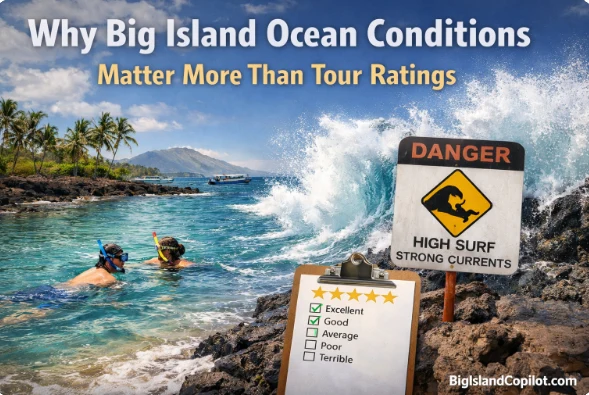
When planning ocean activities in Hawaiʻi—snorkeling, swimming, kayaking, manta dives, dolphin encounters—most visitors do the same thing: they sort by ⭐⭐⭐⭐⭐ and book the highest-rated tour.
That’s understandable. Ratings feel safe.
But Big Island ocean conditions matter more than tour ratings—every single time.
A five-star tour on the wrong day can be dangerous, disappointing, or cancelled. A lesser-known operator on the right day can give you a once-in-a-lifetime experience.
Here’s why.
The Ocean Is the Real Boss Here
The Pacific around Hawaiʻi isn’t a calm backdrop—it’s an active system shaped by:
- Trade winds
- Seasonal swells
- Tides and currents
- Island geography (lava shelves, deep drop-offs, channels)
No tour company controls these things. They react to them.
A tour’s rating reflects past experiences, not today’s ocean reality.
What Ratings Don’t Tell You
Tour ratings rarely reflect:
- Whether conditions were calm or rough
- If visibility was excellent or murky
- How strong the current was that day
- Whether wildlife was abundant or scarce
- If the tour was rushed, shortened, or altered due to weather
Most reviews sound like this:
“Amazing crew, great vibes, saw turtles!”
What’s missing is why it worked that day.
Big Island Ocean Conditions Decide the Experience
1. Visibility Beats Everything
Clear water matters more than any boat, guide, or equipment.
- Calm seas = clear snorkeling
- Swell + wind = churned sand, poor visibility
A top-rated snorkel tour in rough conditions means:
- You see less
- You work harder
- You enjoy it less
2. Wildlife Follows Conditions, Not Schedules
Dolphins, manta rays, turtles, and fish move based on:
- Water clarity
- Currents
- Feeding patterns
Tours can’t “guarantee” wildlife—they can only go where conditions might allow encounters.
3. Safety Is Condition-Dependent
Strong currents and surge don’t care how experienced a tour company is.
Even great operators will:
- Cancel
- Shorten trips
- Keep guests in limited areas
A calmer day with a smaller operator is often safer than a busy, overbooked tour on a rough one.
Big Island Reality: One Side Can Be Perfect, the Other Dangerous
This island is unique.
On the same day:
- Kona can be glassy and clear
- Hilo can be rough and brown
- Or vice versa
Tour ratings don’t adjust for that. Ocean conditions do.
What You Should Check Before Booking
Instead of starting with ratings, start here:
1. Wind Forecast
Trade winds pick up fast.
- Mornings are usually calmer
- Afternoon winds can ruin conditions
Trade winds are one of the most misunderstood factors affecting Big Island ocean conditions. They typically build as the day goes on, often starting light in the early morning and strengthening by late morning or afternoon. Even when the forecast looks mild, trade winds can quickly turn calm water into choppy, uncomfortable, or unsafe conditions—especially for snorkeling, swimming, and small boat tours.
Locals almost always favor early morning ocean time. Before trade winds establish, the ocean is often calmer, visibility is better, and conditions are more forgiving. By midday, wind-driven surface chop can reduce visibility, tire swimmers, and limit how much time you can comfortably spend in the water.
2. Swell Direction & Height
A 3–5 ft swell sounds small—but direction matters more than height.
Wrong swell + lava shelves = surge.
3. Tide Timing
Some tide stages:
- Improve visibility
- Reduce current
- Make entry and exit safer
On the Big Island, the direction of the tide matters more than the height. An incoming (rising) tide usually brings clearer water, steadier conditions, and more active marine life, while an outgoing (falling) tide can reduce visibility and increase currents—especially along lava coastlines and channels. The calmest window is often mid-incoming tide or brief slack tide, particularly in the morning before trade winds build. When in doubt, choose calm mornings with a rising tide over peak high tide or late-day conditions.
Why Locals Book Differently
Locals rarely book ocean tours weeks in advance.
They:
- Watch conditions
- Choose calm days
- Adjust plans last-minute
Visitors lock in tours early—and then hope conditions cooperate.
How to Use Ratings the Right Way
Tour ratings still matter—but only after conditions are right.
Use them to evaluate:
- Safety culture
- Honesty in cancellations
- Crew professionalism
- Communication
Not to override bad ocean days.
The BigIslandCopilot Approach
At BigIslandCopilot, we prioritize:
- Ocean awareness
- Real conditions
- Practical decision-making
Our Guides are designed to help you:
- Avoid unsafe or disappointing days
- Choose the right activity for current conditions
- Understand why something works—or doesn’t
Because the best tour isn’t the highest-rated one. It’s the one that matches the ocean that day.
Bottom Line
⭐⭐⭐⭐⭐ ratings don’t control:
- Visibility
- Currents
- Swell
- Wind
- Wildlife behavior
The ocean does.
Aloha, did you like this page?