
⚠️ Big Island Safety Notice
The Big Island’s environment can change rapidly — ocean conditions, lava flows, weather, and trails may become dangerous without warning. These Guides are for educational purposes only and do not replace real-time assessments, posted warnings, or professional guidance. Always check current conditions before entering the water, hiking, or exploring, and do not proceed if conditions appear unsafe — even if a location is described as “safer.”
Table of Contents
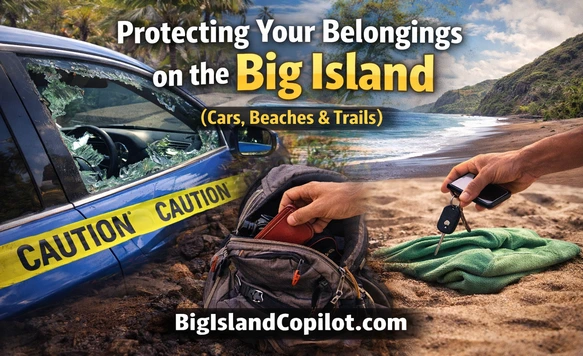
Visiting the Big Island often feels different from other travel destinations. It’s slower. More relaxed. Less commercial in many places. That atmosphere leads many visitors to let their guard down—and while most trips are trouble-free, the most common vacation problem reported here isn’t injury or weather. It’s lost or stolen belongings.
This guide isn’t About fear. It’s about understanding why theft happens here, protecting your belongings, where it’s most likely, and how to avoid becoming an easy target—without ruining your vacation or turning every outing into a security drill.
Why Theft Happens Here (Context Matters)
The Big Island is geographically large but sparsely populated in many areas. Beaches, trailheads, scenic pull-outs, and lookouts often have:
- Limited visibility
- No staff or security
- Long response times for authorities
- High numbers of rental vehicles
Add in predictable tourist behavior—bags left behind, everyone swimming at once, “just five minutes” stops—and theft becomes opportunistic, not personal.
Most incidents are non-violent, quick, and avoidable.
Rental Cars: The #1 Risk Area
Rental cars are the most common target, especially at:
- Beach parks
- Trailheads
- Scenic overlooks
- Remote pull-offs
Why Rental Cars Are Targeted
- Easily identifiable (license plates, stickers, models)
- Assumed to contain valuables
- Often parked for long periods
What Actually Works
- Nothing visible. Ever. Not even jackets, reusable bags, or empty backpacks.
- Do not rely on the trunk—break-ins happen even when items aren’t visible.
- Park near other cars when possible.
- Avoid leaving the car for “quick stops.”
Common Mistake
Packing your beach gear in the morning and leaving it in the car “just while we hike/snorkel first.”
Beaches: How Theft Actually Happens
Beach theft isn’t dramatic—it’s subtle.
High-Risk Moments
- Everyone enters the water at once
- Early morning or sunset hours
- Isolated coves with few sightlines
Best Practices
- Bring only what you need
- Leave one person with belongings when possible
- Use waterproof pouches for essentials
- Avoid spreading items far apart
What Not to Do
- Bury items in the sand (this draws attention)
- Hide keys in obvious places (tires, rocks)
Trails, Lookouts & Scenic Stops
Trailhead break-ins are common across the island, including well-known locations.
Why Trails Are Risky
- Long time away from vehicle
- Predictable visitor patterns
- No staff presence
Smart Habits
- Empty car before hiking
- Avoid leaving items “out of sight”
- Don’t assume remote = safe
Bus Tours & Group Excursions (Often Overlooked)
Yes—bus tours deserve special attention.
Why They’re Risky
- Bags left under seats
- Luggage in exterior compartments
- Entire group exits at once
- Distraction = opportunity
What to Do
- Keep valuables on your person
- Use small cross-body bags
- Don’t leave electronics behind
Most tour companies are reputable, but they are not responsible for unattended personal items.
Ocean Activities: Snorkeling, Surfing, Kayaking
False Sense of Security
Dry bags and hidden stashes feel safe—but they’re visible.
Better Options
- Go with a partner and rotate watch
- Bring minimal items
- Use waterproof waist packs
Boat ramps and harbor areas can be especially risky.
Where You Stay Matters
Hotels
- Parking garages can still be targeted
- Don’t leave items visible in cars
Condos
- Shared lanais = shared access
- Lock doors even when stepping out briefly
Vacation Rentals
- Secure doors and windows
- Don’t leave gear outside overnight
Families, Kids & Extra Gear
Families often carry:
- Diaper bags
- Tablets
- Beach toys
- Strollers
These items are frequently left unattended because they feel low-value. To someone else, they’re not.
Tip
Designate one “non-beach bag” that never leaves your side.
What NOT to Do
- Do not confront suspected thieves
- Do not chase
- Do not leave angry notes
- Do not assume theft is “rare enough to ignore”
Stay calm. Stay safe.
If Something Does Go Missing
Immediate Steps
- Note time and location
- Take photos if vehicle damage occurred
- Contact non-emergency police if needed
Hawai‘i County Police (Non-Emergency):
https://www.hawaiipolice.com/services/non-emergency
https://www.hawaiipolice.com
Rental Cars
- Contact rental company immediately
- Document everything
Insurance
- Many travel and credit card policies cover theft
- File reports promptly
Useful Resources (Printed & Clickable)
- Hawai‘i County Police:
https://www.hawaiipolice.com - Hawaii County Alerts:
https://www.hawaiicounty.gov/active-alerts - NOAA Ocean Conditions:
https://tidesandcurrents.noaa.gov/ - Surf & Conditions:
https://www.surfline.com/surf-report/hawaii - Wind & Weather Patterns:
https://www.windy.com/
The Reality Check (Reassuring, Not Scary)
Millions of people visit the Big Island every year and most never experience theft. The goal isn’t to be anxious—it’s to avoid the few common mistakes that cause most problems.
If you:
- Pack light
- Stay aware
- Don’t leave things unattended
You’ll likely never think about this guide again—and that’s the point.
Visiting the Big Island With Kids
Traveling with children on the Big Island is rewarding, but families naturally carry more gear, more distractions, and more stops—which also creates more chances for belongings to be left unattended. A few small habit changes make a big difference.
The #1 Rule for Families
Never leave kid-related bags in the car—ever.
Diaper bags, backpacks, snack bags, and tablets are among the most commonly stolen items because they’re visible and assumed to contain valuables.
Before You Leave the Car
- Do a full visual sweep: seats, floor, cup holders, trunk
- Take all bags with you, even for “quick stops”
- Avoid keeping a “car bag” with toys or electronics
At Beaches
- Designate one adult as the “belongings anchor” when kids are in the water
- Keep items clustered together, not spread across towels
- Avoid beaches where the group swims all at once unless you pack ultra-light
On Trails & Lookouts
- Bring only essentials in a single backpack
- Never leave strollers, carriers, or toy bags by the car
- Short scenic stops are higher risk than long hikes
Bus Tours & Group Activities
- Keep children’s bags on your body or in your lap
- Don’t store tablets or snacks under seats
- Label everything—especially hats, shoes, and water bottles
At Your Lodging
- Don’t leave strollers, toys, or shoes outside overnight
- Lock doors even during short breaks or nap time
- Keep a consistent “drop zone” for keys and devices
Best Family Habit
Create a “one-bag rule”:
If it doesn’t fit in that bag, it doesn’t come with you.
Reassurance for Parents
The Big Island is family-friendly and generally safe. Most issues happen when parents are distracted, rushed, or overloaded—not because they’re careless. A little planning lets you relax and focus on what matters: your kids enjoying the island.
⚠️ Quick Safety Reminder
Conditions can change suddenly. Always check local conditions, warnings, and official guidance before entering the ocean, lava areas, or trails. Safety is your responsibility.
Aloha, did you like this page?