
⚠️ Big Island Safety Notice
The Big Island’s environment can change rapidly — ocean conditions, lava flows, weather, and trails may become dangerous without warning. These Guides are for educational purposes only and do not replace real-time assessments, posted warnings, or professional guidance. Always check current conditions before entering the water, hiking, or exploring, and do not proceed if conditions appear unsafe — even if a location is described as “safer.”
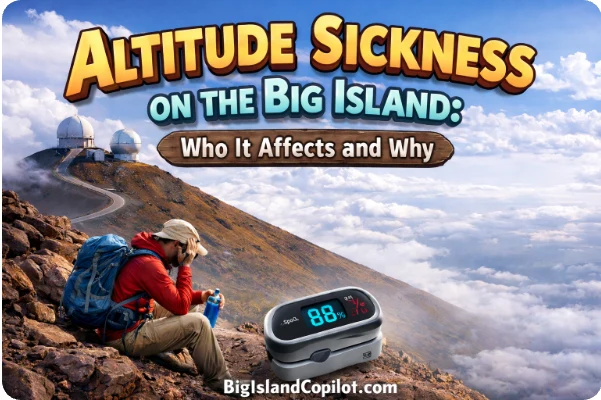
Altitude sickness, also known as acute mountain sickness (AMS), is caused by reduced oxygen levels at high elevations. Visiting the Big Island isn’t just About beaches, volcanoes, and waterfalls — it’s also about mountains. Mauna Kea, Mauna Loa, and the surrounding high-altitude areas offer incredible stargazing, hiking, and photography opportunities. But these elevated landscapes bring one risk many travelers underestimate: altitude sickness.
Even fit, healthy travelers can experience symptoms, sometimes seriously. Understanding how it works, who is at risk, and how to prevent it is crucial for a safe and enjoyable trip.
This guide will explain why altitude sickness happens, the symptoms to watch for, who’s most at risk, and practical strategies for avoiding it on the Big Island.
Why Altitude Matters on the Big Island
Mauna Kea stands at 13,796 feet (4,205 meters), making it the highest point in Hawaii. Mauna Loa is slightly lower at 13,681 feet (4,170 meters). These elevations bring unique risks:
- Oxygen levels drop: at the summit of Mauna Kea, there is only about 60% of the oxygen available at sea level.
- Air pressure decreases: your body must work harder to get oxygen to tissues.
- Weather is extreme: high winds, cold temperatures, and sudden weather changes compound the effects of altitude.
Even if you live at sea level, driving from Kona (sea level) to the summit within a few hours can trigger symptoms quickly. Altitude sickness can start at elevations as low as 8,000 feet (2,438 meters), so it’s not limited to the very peaks.
Who Is Most Likely to Be Affected
While altitude sickness can affect anyone, some travelers are more susceptible:
- First-time visitors to high elevations: Your body hasn’t adapted to thinner air.
- Older adults or those with medical conditions: Heart or lung conditions increase risk.
- Children: They may not recognize symptoms or communicate them.
- People moving quickly from sea level to summit: Rapid ascents are the primary risk factor.
- Visitors who overexert: Hiking, running, or heavy activity at high altitude increases symptoms.
- Those who drink alcohol or caffeine excessively: Both can exacerbate dehydration and worsen AMS.
Importantly, fitness is not a protective factor. Even elite athletes can experience altitude sickness if they ascend too fast.
Symptoms to Watch For
Symptoms can appear within a few hours of ascent, and range from mild to severe:
Mild to Moderate Symptoms:
- Headache
- Nausea or vomiting
- Dizziness
- Shortness of breath
- Fatigue
- Loss of appetite
- Trouble sleeping
Severe Symptoms (Seek Immediate Help):
- Confusion or difficulty walking
- Persistent vomiting
- Severe shortness of breath even at rest
- Swelling of hands, feet, or face
- Bluish lips or fingertips (sign of hypoxia)
Tip: Mild symptoms can progress quickly if ignored, especially above 12,000 feet.
How Your Body Responds
At high altitudes, your body reacts in several ways:
- Increased breathing rate: You naturally breathe faster to take in more oxygen.
- Increased heart rate: Circulation speeds up to deliver oxygen more efficiently.
- Fluid shifts: Your body may retain fluids in tissues, leading to swelling.
- Sleep disruption: High altitudes can cause shallow breathing during sleep, making rest less restorative.
These adaptations take time. Rapid ascents overwhelm the body’s ability to adjust, which is why gradual exposure is key.
Preventing Altitude Sickness
The best approach is prevention, not reaction. Here’s how to minimize risk:
- Acclimate Slowly
- If possible, spend a night at 8,000–9,000 feet before going higher.
- Avoid rapid ascents directly from sea level to the summit.
- Stay Hydrated
- Drink plenty of water; dehydration worsens symptoms.
- Limit alcohol and caffeine during ascent.
- Eat Light, Balanced Meals
- Avoid heavy or greasy foods; focus on carbohydrates for energy.
- Ascend Gradually During Activities
- Take breaks on hikes or drives.
- Consider stopping halfway up Mauna Kea at the visitor center (9,200 feet) before continuing to the summit.
- Know Your Limits
- Don’t push yourself to reach the summit if you feel unwell.
- Descend immediately if severe symptoms develop.
- Medication (Optional and Only Under Guidance)
- Some travelers use acetazolamide (Diamox) to reduce symptoms.
- Always consult a doctor before use.
Special Considerations for Mauna Kea and Mauna Loa Visits
Visiting these iconic peaks is tempting, but safety should come first.
Mauna Kea Visitor Center:
- Elevation: 9,200 feet (2,804 m)
- Recommended stop to acclimate, hydrate, and enjoy stargazing at a lower altitude.
- Offers restrooms and guidance before the summit.
Summit of Mauna Kea:
- Elevation: 13,796 feet (4,205 m)
- Vehicle access only recommended for well-acclimated visitors.
- Rangers frequently remind visitors of AMS risks.
- Consider joining guided tours with experienced drivers and oxygen availability.
Mauna Loa Hikes:
- Long, strenuous, and remote.
- Overnight or multi-day hikes recommended to allow proper acclimation.
- Always check conditions: Hawai‘i Volcanoes National Park
7. Children and Families
Children may not communicate symptoms clearly. Parents should:
- Limit altitude exposure for kids under 12 on high peaks.
- Monitor for unusual fatigue, irritability, or dizziness.
- Descend immediately if symptoms appear.
Resources and Monitoring
To plan safely, use reliable resources:
- Hawai‘i Volcanoes National Park – Summit Safety Tips:
https://www.nps.gov/havo/planyourvisit/mauna-kea.htm - CDC – Altitude Illness Guidance:
https://www.cdc.gov/features/altitude-illness/index.html - Hawai‘i County Civil Defense Alerts:
https://www.hawaiicounty.gov/active-alerts - Weather & Road Conditions for High Elevation:
- Mauna Kea Visitor Center: https://www.ifa.hawaii.edu/mv/
- Hawaii DOT road conditions: https://hidot.hawaii.gov/highways/
Enjoying the Peaks Safely
- Altitude sickness can affect anyone, regardless of fitness.
- Symptoms can appear above 8,000 feet and worsen rapidly.
- Gradual acclimation, hydration, and awareness are key.
- Children, older adults, and those with medical conditions require extra caution.
- Know when to turn back — safety outweighs summit selfies.
The Big Island’s mountains are breathtaking, and understanding altitude sickness ensures your visit is both safe and memorable.
⚠️ Quick Safety Reminder
Conditions can change suddenly. Always check local conditions, warnings, and official guidance before entering the ocean, lava areas, or trails. Safety is your responsibility.
Aloha, did you like this page?