
⚠️ Big Island Safety Notice
The Big Island’s environment can change rapidly — ocean conditions, lava flows, weather, and trails may become dangerous without warning. These Guides are for educational purposes only and do not replace real-time assessments, posted warnings, or professional guidance. Always check current conditions before entering the water, hiking, or exploring, and do not proceed if conditions appear unsafe — even if a location is described as “safer.”
Table of Contents
If you spend any time on Hawaiʻi Island, you’ll hear it sooner or later:
“Just use common sense.”
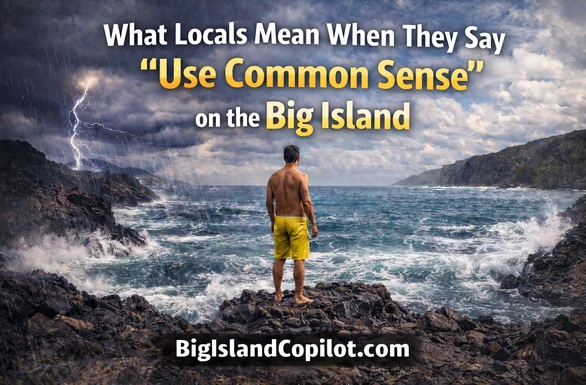
To visitors, that can sound vague, dismissive, or even a little frustrating. But on the Big Island, “use common sense” has a very specific meaning, shaped by geography, weather, culture, and lived experience. It’s less about rules written on signs and more about understanding where you are, what can change quickly, and how your actions affect both your safety and the people who live here.
This guide breaks down what locals really mean—and how following that advice can keep you safe, respectful, and welcome.
1. Common Sense Here Is Context-Aware, Not Rule-Based
On the mainland, “common sense” often means following posted rules and assuming conditions are relatively stable.
On the Big Island, conditions change fast, and not everything dangerous comes with a warning sign.
Examples:
- A calm beach can become hazardous in 20 minutes
- A clear road can turn foggy, wet, and slick without warning
- A trail that looks easy can end in a steep drop or lava crack
Local common sense = reading the situation, not just the sign.
If something feels off, looks rough, or doesn’t match what you expected, the local move is to pause, reassess, or turn back.
2. “If You’re Asking, the Answer Is Probably No”
Locals often decide things before they become problems.
Examples:
- “Should I try to cross this stream?”
- “Should I go closer to the cliff for a better photo?”
- “Should I swim just a little farther?”
If you’re already debating it, locals would usually say:
“Nah. Not worth it.”
Common sense here means not pushing situations to see what happens—because locals have already seen what happens.
3. Nature Doesn’t Care How Confident You Feel
One of the biggest misunderstandings visitors have is assuming experience elsewhere translates here.
- Strong swimmers underestimate Hawaiian currents
- Hikers from dry climates underestimate heat + humidity
- Drivers underestimate lava rock roads and sudden rain
Local common sense accepts this truth:
The island doesn’t care how prepared you think you are.
That’s why locals:
- Don’t turn their backs on the ocean
- Don’t walk close to cliff edges
- Don’t underestimate short hikes
- Don’t assume cell service will save them
4. Ocean “Common Sense” Is a Whole Different Language
When locals say “use common sense” near the ocean, they usually mean:
- If the water looks rough, it is rough
- If locals aren’t swimming, you shouldn’t be either
- If waves are hitting the rocks, don’t stand there
- If there’s no lifeguard, you’re on your own
It also includes unspoken rules:
- Don’t turn your back on the water
- Don’t climb wet rocks
- Don’t swim alone in unfamiliar spots
- Don’t assume calm = safe
The ocean here is powerful even on “nice days.” Common sense means respecting that power before something goes wrong.
5. Trails, Lava, and “It Looked Walkable”
Hawaiʻi Island has miles of:
- Old lava flows
- Sharp ʻaʻā rock
- Hidden cracks
- Unmarked paths
Local common sense says:
- Wear real shoes
- Bring water, even for short walks
- Turn around before you’re tired
- Don’t assume a visible path goes somewhere safe
A big red flag to locals:
“It looked easy.”
That’s how people get stranded, injured, or lost—especially in lava fields where everything looks the same on the way back.
6. Respecting Places You Don’t Fully Understand
“Use common sense” often doubles as “show respect.”
This applies to:
- Sacred sites (heiau, burial areas)
- Restricted land
- Cultural landmarks
- Quiet residential areas
Local common sense here means:
- Don’t climb on things that look ceremonial
- Don’t take rocks, sand, or artifacts
- Don’t wander past gates or signs
- Don’t treat neighborhoods like attractions
Even when something isn’t clearly labeled, locals err on the side of leaving it alone.
7. Time, Distance, and Island Reality
Visitors often underestimate how long things take.
Local common sense understands:
- Distances are deceptive
- Roads are slower than they look
- Weather affects travel
- Darkness comes quickly in rural areas
Examples:
- A “short drive” can become an hour
- A sunset stop can delay you after dark
- A detour can leave you without services
That’s why locals plan conservatively and don’t stack too many activities into one day.
8. Driving: Defensive, Patient, and Alert
When locals say “use common sense” while driving, they mean:
- Expect sudden stops
- Watch for pedestrians, animals, and cyclists
- Slow down in rain or fog
- Don’t rush unfamiliar roads
It also means:
- Don’t park where you’ll block access
- Don’t pull over blindly
- Don’t assume shoulders are safe
Island driving rewards patience—not speed.
9. Watching Others Is Part of Common Sense
Locals constantly read the room.
If you notice:
- Locals packing up
- Lifeguards watching closely
- Boats staying back
- Trails suddenly empty
That’s information.
Local common sense means letting other people’s caution inform your choices, not assuming they’re overreacting.
10. Common Sense Is About Responsibility, Not Fear
This isn’t about being scared or avoiding adventure.
It’s about:
- Knowing your limits
- Respecting the environment
- Not creating emergencies others have to respond to
- Leaving places better than you found them
Search and rescue crews, lifeguards, and locals see preventable accidents regularly. “Use common sense” is shorthand for:
“Don’t make someone else risk their life because you ignored the obvious.”
A Simple Local Checklist
Before doing anything unfamiliar, locals subconsciously ask:
- Does this feel stable?
- Would I do this if no one was watching?
- What’s my exit if conditions change?
- Is anyone else doing this—or avoiding it?
- Is this worth the risk if it goes wrong?
If more than one answer feels shaky, the common-sense move is to stop.
Why This Phrase Matters So Much Here
On the Big Island:
- Help can be far away
- Terrain is unforgiving
- Weather is unpredictable
- Nature always wins
“Use common sense” isn’t lazy advice—it’s a survival mindset passed down through experience.
Visitors who understand that tend to:
- Stay safer
- Have better experiences
- Earn local respect
- Leave with stories instead of regrets
If you remember one thing, make it this:
On Hawaiʻi Island, common sense isn’t about confidence—it’s about humility.
Respect the island, listen to what it’s telling you, and you’ll understand exactly what locals mean.
⚠️ Quick Safety Reminder
Conditions can change suddenly. Always check local conditions, warnings, and official guidance before entering the ocean, lava areas, or trails. Safety is your responsibility.
Aloha, did you like this page?