Ōhiʻa Lehua: Big Island’s Iconic Native Bloom
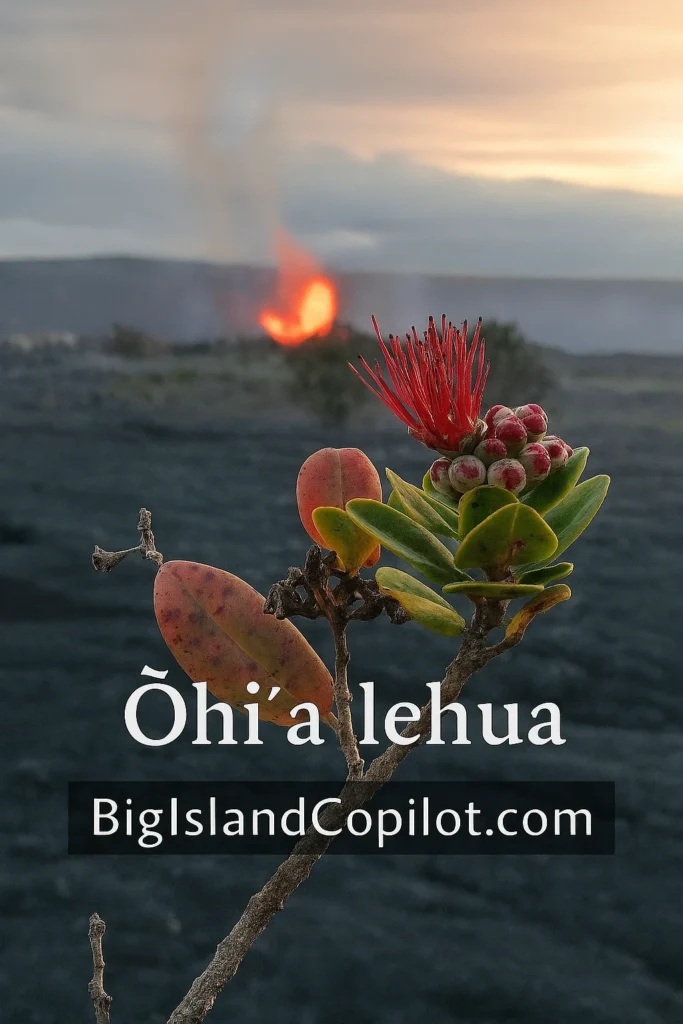 About the Ōhiʻa lehua. Image shows a blooming Ōhiʻa lehua flower against the backdrop of a fountaining Volcano eruption ” class=”wp-image-1210 size-full”/>
The ʻŌhiʻa lehua is one of the most iconic native trees of Hawaiʻi, instantly recognizable by its bright red, brush-like flowers. It grows across a wide range of elevations, from coastal lava flows to high-elevation forests, and can bloom almost year-round, although flowering often follows rainy periods. The tree’s dark, textured bark and leathery leaves provide a striking contrast to its vivid blossoms.
Beyond its beauty, the ʻŌhiʻa lehua holds deep cultural significance. In Hawaiian mythology, the tree and its flowers symbolize love, respect, and resilience.
The Story of Pele and ʻŌhiʻa explains how the flowers became red — a symbol of eternal love and devotion. Traditionally, lehua blossoms are used in leis for weddings, ceremonies, and other cultural observances, connecting the people to their land and heritage.
Ecology and Importance
ʻŌhiʻa lehua is essential to Big Island ecosystems. Its flowers provide critical food for native honeycreepers, insects, and other pollinators, particularly in high-elevation forests. The tree is a pioneer species, often colonizing fresh lava flows and gradually creating conditions that allow other native plants to take root. This resilience makes ʻŌhiʻa an ecological cornerstone, supporting forest regeneration and contributing to the overall health of native forests.
The tree’s adaptability is remarkable. ʻŌhiʻa can thrive in a variety of soils and climates, from wet cloud forests to dry coastal lava zones. This flexibility allows it to dominate both lush and harsh environments, providing shade and shelter for understory plants and animals. Alongside other native species, such as Hawaiian lobelia and ferns, ʻŌhiʻa lehua forms a vibrant, interdependent ecosystem.
Seasonal Bloom Patterns
While ʻŌhiʻa lehua can bloom nearly year-round, peak flowering is often triggered by rainfall rather than calendar months. In wet windward forests, flowers can appear continuously, whereas leeward dry forests may only bloom briefly after heavy rain. Elevation dramatically affects the appearance of the blooms — at 2,000 feet, you may see scattered red blossoms in the canopy, while at 4,000 feet, entire forest floors can be dotted in color.
Some notable locations to witness these seasonal displays include the Hāmākua Coast trails, Hawaiʻi Volcanoes National Park’s mid-elevation forests, and the slopes of Mauna Kea and Mauna Loa. Visitors may notice entire landscapes painted in red shortly after rainfall, creating spectacular photography opportunities and unforgettable nature experiences.
Cultural Significance
The ʻŌhiʻa lehua’s role in Hawaiian culture is as rich as its ecological importance. The myth of Pele and ʻŌhiʻa is a story of love and devotion, explaining why the flowers are red and sacred. Lehua blossoms are traditionally used in leis for weddings, hula ceremonies, and other cultural rituals, symbolizing respect, beauty, and a deep connection to the ʻāina (land).
Observing an ʻŌhiʻa in bloom is not just a visual experience — it’s a cultural immersion. By taking time to appreciate the tree in its natural habitat, visitors gain insight into the Hawaiian worldview, which intertwines human life with the cycles of nature and the resilience of the land.
Where to See ʻŌhiʻa lehua
ʻŌhiʻa lehua can be observed on numerous trails across the Big Island. Popular spots include the Hāmākua Coast, Hawaiʻi Volcanoes National Park, and mid-elevation slopes of Mauna Kea and Mauna Loa. Trails can be muddy or slippery, especially after rain, so proper footwear is essential.
For photography, early mornings or late afternoons offer soft lighting that highlights the vivid red flowers without disturbing native birds and pollinators. Binoculars can help spot blossoms high in the canopy. Hikers should remain on marked trails to protect delicate forest ecosystems and avoid trampling understory plants.
Visitors often pair ʻŌhiʻa observation with other native flora, including Hawaiian lobelia, ʻŌhelo shrubs, and ferns, creating a full immersive experience of Big Island forests. Seasonal variations make repeated visits rewarding, as flower density and canopy color can change dramatically with elevation, rainfall, and time of year.
Observing Native Plants Responsibly
While enjoying ʻŌhiʻa lehua and other native plants, it’s important to minimize impact. Avoid picking flowers or disturbing the plants. Respect wildlife, stay on marked trails, and carry out all trash. Understanding the differences between native species and invasives, such as the African Tulip Tree, helps maintain the delicate balance of these ecosystems.
For those interested in learning more, see our Native Plants hub and Seasonal Nature hub for additional Guides on Big Island flora. These resources provide detailed information on identifying plants, seasonal blooms, and safe observation tips.
Aloha, did you like this page?