
⚠️ Big Island Safety Notice
The Big Island’s environment can change rapidly — ocean conditions, lava flows, weather, and trails may become dangerous without warning. This guide is for educational purposes only and does not replace real-time assessments, posted warnings, or professional guidance. Always check current conditions before entering the water, hiking, or exploring, and do not proceed if conditions appear unsafe — even if a location is described as “safer.”
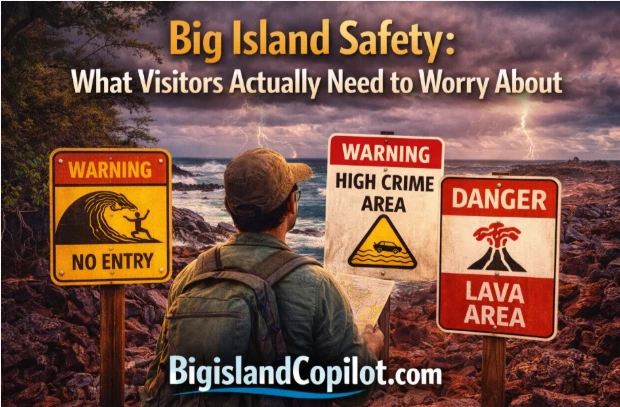
The Big Island is stunning, powerful, and unlike anywhere else on Earth — but it is not a theme park. Visitors who assume Hawaiʻi is automatically “safe because it’s paradise” are the ones who tend to run into trouble. Big Island safety here isn’t About fear; it’s about awareness, preparation, and understanding how quickly conditions can change.
This guide covers the real risks visitors actually encounter, without sugarcoating or exaggeration. It focuses on what locals know, what tourists often overlook, and how to enjoy your trip safely while respecting the people who live here and depend on the same roads, services, and resources you’re using.
1. Driving Is the #1 Big Island Safety Risk
If something goes wrong for visitors, it is most often on the road.
The Big Island has:
- Long stretches with no services
- Poor or nonexistent lighting at night
- Sudden weather changes
- Livestock, pedestrians, and wildlife on roads
- One main highway connecting large areas of the island
Many serious accidents happen because visitors:
- Drive too fast on unfamiliar roads
- Stop suddenly to sightsee
- Don’t pull over when faster traffic stacks up behind them
- Drive at night without realizing how dark rural areas get
- Pass in unsafe areas or conditions.
What to do:
- Slow down
- Use turnouts to let faster local traffic pass
- Never stop in the roadway to take photos
- Avoid night driving when possible, especially outside resort areas
Official road updates and closures:
- Hawaiʻi County Road Closures:
https://www.hawaiicounty.gov/our-county/road-closures - Hawaiʻi Department of Transportation:
https://hidot.hawaii.gov
2. Night Driving Deserves Extra Respect
Once the sun goes down, the island changes.
Outside of resort zones, you may encounter:
- Pitch-black roads with no shoulders
- Sudden fog, rain, or volcanic haze
- People walking along highways in dark clothing
- Animals crossing unexpectedly
Night driving tips locals live by:
- Reduce speed even if the road feels empty
- Watch edges of the road, not just ahead
- Use high beams when safe — and dim immediately for oncoming traffic
- If visibility drops, pull over somewhere safe and wait
- High beams do NOT help you in dense fog.
Weather & visibility updates:
- National Weather Service (Big Island):
https://www.weather.gov/hfo/ - NOAA marine & wind forecasts:
https://marine.weather.gov
3. Volcano Hazards Are Real — Even When There’s No Eruption
Volcanoes don’t need to be erupting to be dangerous.
Risks include:
- Sudden ground instability
- Volcanic gas (VOG) affecting breathing
- Heat and sharp lava rock injuries
- Closed or restricted areas that look “open”
What visitors should always do:
- Stay on marked trails
- Respect closures without exception
- Check conditions the day you go — not the day before
Authoritative volcanic updates:
- Hawaiʻi Volcano Observatory (USGS):
https://www.usgs.gov/observatories/hvo - Volcano alerts:
https://volcanoes.usgs.gov/observatories/hvo/alerts.html
Hawaiʻi Volcanoes National Park conditions:
4. Ocean Conditions Change Fast — Even on Calm Days
Drownings here often happen on days that look “perfect.”
Hidden ocean hazards include:
- Strong shore break
- Rip currents
- Lava rock coastlines with no safe entry points
- No lifeguards at many beaches
Ocean safety rules:
- Never turn your back on the ocean
- Observe before entering
- If locals aren’t swimming, don’t assume it’s safe
- Ask a lifeguard when available
- Wet lava rock is incredibly slippery. Watch your footing.
Ocean & surf safety resources:
- Hawaiʻi Ocean Safety (local lifeguard advisories):
https://hawaiioceansafety.com - National Weather Service surf warnings:
https://www.weather.gov/hfo/
5. Crime, Drugs, and Homelessness — The Honest Reality
This part often gets skipped in travel Guides, but you deserve honesty.
The Big Island does have a serious drug problem, particularly involving methamphetamine. This contributes to:
- Property crime
- Car break-ins
- Unpredictable behavior in certain areas
There is also a visible homeless population in some towns and beach areas. Most people are not dangerous — but visitors should remain aware.
Practical Big Island safety advice:
- Never leave valuables in your car (even hidden)
- Lock doors everywhere, including resort areas
- Avoid confrontations
- Trust your instincts — if a place feels off, leave
Hawaiʻi County Police Department:
Emergency: Dial 911
6. Altitude & Health Risks (Mauna Kea Especially)
Altitude sickness is one of the most underestimated risks.
At Mauna Kea:
- Summit elevation is over 13,800 feet
- Oxygen levels drop significantly
- Children, elderly visitors, and people with health conditions are most at risk
Rental car companies do not allow vehicles to go to the summit — even 4x4s — and violations can void insurance.
Safer option:
- Visit the Mauna Kea Visitor Information Station
- Allow time to acclimate
- Skip the summit if you feel unwell
Official Mauna Kea visitor safety info:
7. Emergency Numbers & When to Use Them
- Emergency (Police / Fire / Medical): 911
- Hawaiʻi County Police:
https://www.hawaiipolice.com - Hawaiʻi County Fire Department:
https://www.hawaiicounty.gov/departments/fire
Save these before you need them — cell service is unreliable in many areas.
Big Island Safety Is About Respect
Staying safe on the Big Island isn’t about fear — it’s about understanding that this is a real place, with real people, real roads, and real risks.
Slow down.
Pay attention.
Respect closures.
Share the road.
Listen to locals.
Do that, and you’ll not only stay safer — you’ll experience Hawaiʻi in a way most visitors never do.
⚠️ Quick Safety Reminder
Conditions can change suddenly. Always check local conditions, warnings, and official guidance before entering the ocean, lava areas, or trails. Safety is your responsibility.
Aloha, did you like this page?