⚠️ Big Island Safety Notice
The Big Island’s environment can change rapidly — ocean conditions, lava flows, weather, and trails may become dangerous without warning. This guide is for educational purposes only and does not replace real-time assessments, posted warnings, or professional guidance. Always check current conditions before entering the water, hiking, or exploring, and do not proceed if conditions appear unsafe — even if a location is described as “safer.”
Table of Contents
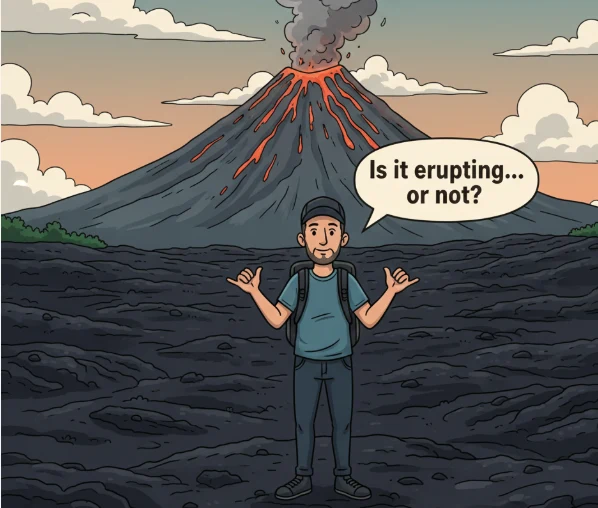
Visitors planning a trip to Hawaiʻi Island often ask the same question:
The short answer is: sometimes — but not in the way many people expect.
The longer answer matters if you’re planning a visit, hoping to see lava, or concerned about safety.
Most visitors can safely travel to the Big Island during a volcanic eruption by staying out of closed areas, checking Hawai‘i Volcanoes National Park alerts, and following local safety guidance, since eruptions are usually confined to specific zones.
This guide explains how eruptions on the Big Island actually work, how to check current conditions reliably, and what “active” really means for visitors.
What Volcano Are People Talking About?
When people ask whether “the Big Island volcano” is erupting, they are almost always referring to Kīlauea, one of the most active volcanoes on Earth.
Kīlauea is located within Hawaiʻi Volcanoes National Park and has a long history of frequent eruptions. It behaves very differently from volcanoes that erupt once and then go quiet for decades or centuries.
Active Does Not Mean Constantly Erupting
One of the biggest misconceptions visitors have is assuming that an “active volcano” means lava is always flowing or visible.
In reality:
- Active means the volcano has erupted in recent geological time and is likely to erupt again.
- It does not mean lava is erupting at this moment.
Kīlauea often goes through cycles:
- Periods of visible surface activity (lava fountains, flows, or glowing lava)
- Periods of quiet, when magma is underground but no lava is visible
These quiet periods can last days, weeks, months, or even longer — and then activity can resume with little notice.
How Eruptions Typically Happen on the Big Island
Most modern Kīlauea eruptions follow a similar pattern:
- Activity is usually confined to the summit area or designated rift zones
- Lava often remains inside craters or restricted areas
- Eruptions may occur in short episodes, rather than one continuous event
This means:
- You might visit during a pause and see no lava
- Another visitor a week later might see dramatic activity
- Neither experience is “wrong” — it’s just how Kīlauea behaves
Is It Safe to Visit If the Volcano Is Active?
Yes — when you follow official guidance.
The Big Island has decades of experience managing volcanic activity. When eruptions occur:
- Hazard zones are clearly defined
- Unsafe areas are closed
- Viewing areas are adjusted based on conditions
Most visitor areas remain open unless there is a clear risk from:
- Volcanic gas (vog)
- Ground instability
- Lava flows approaching infrastructure
If an area is open to the public, it has been assessed as safe under current conditions.
How to Check If the Volcano Is Erupting Right Now
Because conditions can change, the best approach is to check authoritative sources, not social media or rumor-based websites.
The most reliable sources are:
- USGS Hawaiian Volcano Observatory (HVO)
Provides official volcano status, alert levels, and daily updates
👉 https://www.usgs.gov/volcanoes/kilauea - USGS Kīlauea Webcams
Live views of the summit and crater areas
👉 https://www.usgs.gov/volcanoes/kilauea/webcams - Hawaiʻi Volcanoes National Park (NPS)
Park access, closures, and visitor safety information
👉 https://www.nps.gov/havo - USGS Kīlauea Live YouTube Streams
Live views of the summit and crater areas on YouTube.
👉 https://www.youtube.com/@usgs/streams
These sources explain not just whether there is activity, but where it is occurring and whether it is visible or accessible.
What Visitors Should Realistically Expect
If you’re planning a trip around volcano viewing, it’s important to set realistic expectations:
- Seeing lava is never guaranteed
- Lava may be visible only at night or via webcams
- Even during eruptive periods, lava may be contained within closed areas
- Conditions can change quickly due to weather, gas, or seismic activity
Many visitors still find the park rewarding even without active lava, thanks to:
- Steam vents
- Volcanic landscapes
- Craters and lava fields
- Educational exhibits and ranger programs
Why Eruptions Don’t Follow Schedules
Volcanoes are driven by complex geological processes deep underground. While scientists can monitor magma movement, gas emissions, and ground deformation, exact timing cannot be predicted.
That’s why you’ll often see language like:
- “Eruptive activity may resume”
- “Conditions are consistent with possible eruption”
- “The volcano remains active”
This isn’t uncertainty — it’s honest science.
Does an Eruption Affect Flights or Accommodations?
In most cases:
- Flights continue normally
- Airports remain open
- Hotels and businesses operate as usual
Aviation alerts are issued when volcanic ash could affect aircraft, but these situations are monitored closely and communicated clearly.
Bottom Line for Visitors
- Yes, Kīlauea is an active volcano
- No, it is not always erupting
- Lava visibility depends on timing, location, and access
- Official sources provide the most accurate, up-to-date information
- Visiting the park is safe when following posted guidance
If your goal is to see lava, flexibility helps. If your goal is to experience one of the most geologically fascinating places on Earth, the Big Island delivers — erupting or not.
Is it safe to visit the Big Island during a volcanic eruption?
Yes, it is often safe to visit the Big Island during a volcanic eruption if you follow official guidance. Most eruptions are localized, and major tourist areas usually remain open. Visitors should check Hawai‘i Volcanoes National Park alerts, avoid closed areas, and follow instructions from local authorities, as conditions can change quickly.
How can I see real-time volcanic activity on the Big Island?
Track live updates from the USGS Hawaiian Volcano Observatory and the Hawai‘i Volcanoes National Park website. Follow official park social media accounts for alerts on eruptions, closures, and safe viewing areas.
What should I bring when visiting volcanic areas on the Big Island?
Bring sturdy shoes, long pants, a mask for volcanic gases, water, sun protection, and a charged phone. Avoid approaching lava flows without guidance from park officials. For planning tips, see the Hawai‘i Volcanoes National Park visitor guide.
Are trails or roads closed during volcanic eruptions?
Yes. Trails, roads, and viewing areas may close depending on volcanic activity. Always check park alerts before visiting, as conditions can change rapidly.
Can volcanic eruptions affect flights or travel on the Big Island?
Major eruptions can create affecting flights. Roads may also close temporarily due to lava flows or other hazards. Check airline alerts and local news, and monitor updates from Hawai‘i Volcanoes National Park.
Can you see lava on the Big Island without hiking?
Sometimes. Lava visibility depends on current eruption activity and location. When conditions allow, Hawai‘i Volcanoes National may designate official viewing areas such as Crater Rim Drive overlooks Kīlauea caldera viewpoints, or other road-accessible areas within the park. Viewing opportunities can change quickly, so always check park alerts and never approach lava outside approved locations.
Does volcanic smog (vog) affect visitors on the Big Island?
Yes. Vog can impact air quality, especially downwind of active vents. Visitors with asthma or respiratory conditions should monitor air quality updates from the Hawai‘i Department of Health and review vog conditions reported by the USGS Hawaiian Volcano Observatory. When vog levels are high, limit outdoor activity and stay indoors when possible.
Which volcanoes on the Big Island are currently active?
Volcanic activity changes over time and are the Big Island’s most active volcanoes. For the latest eruption status, lava activity, and alerts, check updates from the USGS Hawaiian Volcano Observatory and Hawai‘i Volcanoes National Park
Recommended Next Reads
⚠️ Quick Safety Reminder
Conditions can change suddenly. Always check local conditions, warnings, and official guidance before entering the ocean, lava areas, or trails. Safety is your responsibility.
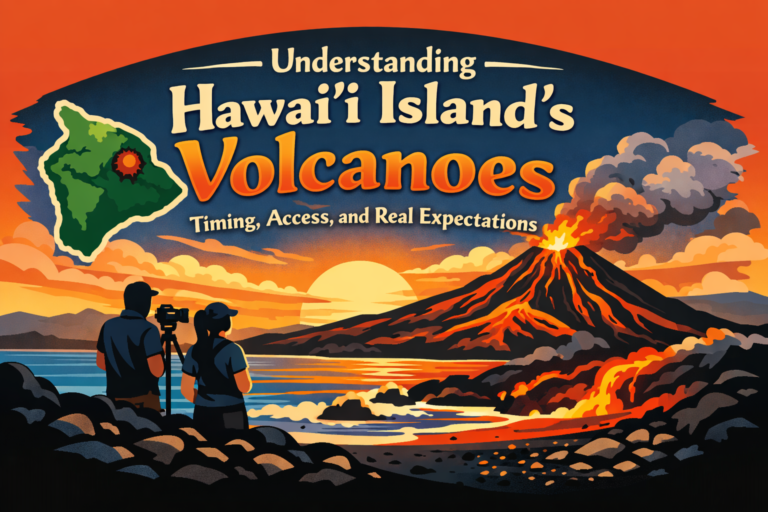
- Understanding Hawaiʻi Island’s Volcanoes: Timing, Access, and Real Expectations
- Can You See Lava on the Big Island? What’s Realistic
- Different Types of Big Island Lava: Pāhoehoe vs ʻAʻā Explained
Aloha, did you like this page?