
⚠️ Big Island Safety Notice
The Big Island’s environment can change rapidly — ocean conditions, lava flows, weather, and trails may become dangerous without warning. This guide is for educational purposes only and does not replace real-time assessments, posted warnings, or professional guidance. Always check current conditions before entering the water, hiking, or exploring, and do not proceed if conditions appear unsafe — even if a location is described as “safer.”
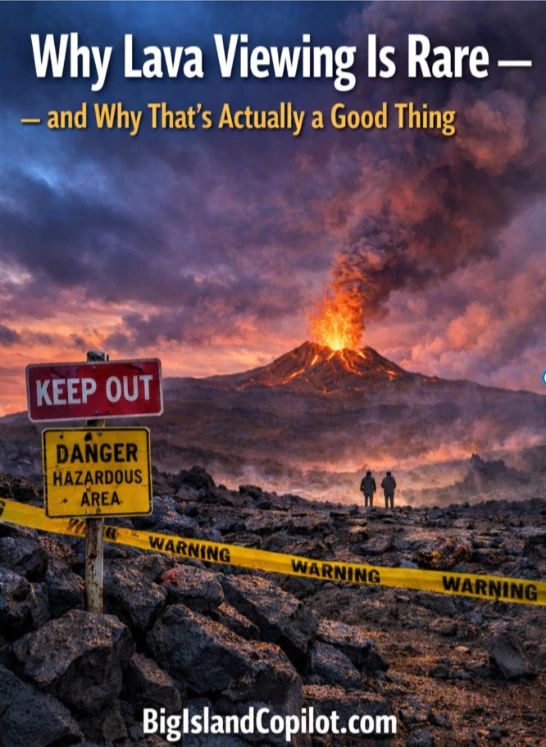
Watching lava flow on the Big Island of Hawaii is one of the most thrilling experiences in the world. The bright orange rivers of molten rock, the steam plumes, and the reshaping of the landscape create a spectacle unlike anywhere else. Yet, despite the island’s reputation as a volcanic wonderland, lava viewing is surprisingly rare.
Part of the reason lava sightings are uncommon is that volcanic activity is unpredictable and highly dynamic. Eruptions can start suddenly, shift course, or stop entirely within days or even hours. Safety concerns also limit access, as molten lava is intensely hot and can release hazardous gases, making some areas off-limits to tourists and even locals. This scarcity, however, adds to the allure—when lava is visible, it’s not just a natural phenomenon, it’s a fleeting, almost magical event that reminds visitors of the raw power and delicate balance of nature on the Big Island.
This guide explores why lava viewing opportunities are limited, the dangers involved, and why these restrictions ultimately benefit visitors, locals, and the environment.
Understanding Lava on the Big Island
The Big Island is home to two active volcanoes:
- Mauna Loa: The world’s largest volcano, last erupted in 2022.
- Kīlauea: One of the world’s most active volcanoes, with recent eruptions in 2018 and 2023.
These volcanoes produce effusive eruptions, where lava flows steadily rather than explosively. While this creates visible lava rivers, the flows are unpredictable in location, speed, and accessibility.
Key Factors Affecting Lava Visibility
- Eruption Location
- Lava flows often occur in remote rift zones or areas with rough, unstable terrain.
- Example: The 2018 Kīlauea eruption primarily affected the Puna District, destroying homes but leaving few areas safely accessible for tourists.
- Flow Dynamics
- Lava can change direction suddenly, making previous viewing spots unsafe or irrelevant within hours.
- Some flows advance quickly, while others puddle in isolated areas, hidden from public view.
- Environmental Hazards
- Lava produces extreme heat, unstable surfaces, and toxic gases (vog and laze).
- Even if lava appears nearby, getting close can be deadly.
Why Lava Viewing Is Rare
Despite public fascination, lava viewing is intentionally limited. Several factors contribute to this rarity:
1. Safety Concerns
- Fresh lava is over 1,000°F (538°C), enough to melt shoes, vehicles, or skin.
- Lava tubes can collapse, and hidden cracks can trap or injure unsuspecting visitors.
- Volcanic gases such as sulfur dioxide (SO₂) can cause respiratory distress.
Example: During the 2018 eruption, tourists attempting to access unmarked lava flows were turned away by emergency personnel, and some were injured trying to cross unstable terrain.
2. Environmental Protection
- Lava flows create fragile new ecosystems.
- Walking on fresh lava can crush pioneer plants or damage geological formations.
- By limiting access, the National Park Service ensures lava flows remain intact for scientific study and future generations.
Hawai’i Volcanoes National Park closures guide.
3. Unpredictability of Eruptions
- Lava flows are unpredictable, and the National Park Service cannot guarantee safe viewing locations.
- Even active flows may be inaccessible due to rough terrain, private property, or emergency closures.
Tip: Always check the USGS lava flow maps before planning a lava-viewing trip.
4. Limited Observation Points
- Only official viewing areas are safe for the public.
- Example locations:
- Halemaʻumaʻu Crater Lookouts – Summit lava lake views. Google Maps Link
- Pohoiki / Isaac Hale Beach Park – Ocean entry lava viewing when active. Google Maps Link
- Chain of Craters Road – Access to lava flows when safe. Google Maps Link
Why the Rarity Is Actually a Good Thing
While it may seem frustrating that lava viewing is limited, there are major benefits to visitors, scientists, and the environment.
1. Safety of Visitors
- Fewer accessible lava flows mean fewer accidents.
- Official viewing platforms allow visitors to experience lava without risking injury or exposure to toxic gases.
- Rangers can monitor visitor safety more effectively when access is controlled.
2. Protection of the Environment
- Lava flows are a pristine laboratory for geologists studying volcanic activity.
- Limited human impact preserves pioneer plants, rock formations, and unique ecosystems that develop on fresh lava.
- Overcrowding could accelerate erosion and habitat destruction.
3. Enhanced Experience
- Scarcity makes lava viewing more special.
- Knowing that lava is rarely seen in person increases the sense of adventure and appreciation.
- Controlled access ensures better quality experiences, rather than overcrowded, unsafe viewing attempts.
4. Scientific Research Opportunities
- Researchers rely on undisturbed lava flows to monitor eruption patterns, gas emissions, and geological shifts.
- Public restrictions help maintain critical data collection sites, improving volcanic hazard forecasting.
Learn more About lava research at USGS Hawaiian Volcano Observatory.
Planning Your Lava Viewing Trip
Even though lava viewing is rare, there are ways to maximize your chances safely:
- Check Current Activity
- Use USGS Kīlauea Lava Maps for up-to-date lava flow info.
- Visit Official Lookouts
- Jaggar Museum / Halemaʻumaʻu Crater – Summit viewpoints.
- Pohoiki / Isaac Hale Beach Park – Ocean entry when safe.
- Chain of Craters Road – Drive-in lava flow access when open.
- Consider Guided Tours
- Professional Guides know safe routes, legal access, and active flow locations.
- Respect Park Rules
- Stay on designated paths.
- Avoid crossing lava flows or entering restricted zones.
- Prepare for Hazards
- Bring sturdy shoes, water, masks, and protective gear for vog if needed.
Real-World Examples of Limited Lava Viewing
- 2018 Kīlauea Eruption: Thousands wanted to see lava in Puna, but only a few safe viewing points were available.
- 2022 Mauna Loa Eruption: Lava flows were monitored from summit viewpoints, while access to rift zones was prohibited.
- 2023 Kīlauea Summit Activity: Summit lava lake activity was visible from Jaggar Museum, while the public was restricted from vent areas.
These examples highlight why lava viewing remains rare—both for safety and conservation.
Key Takeaways
- Lava viewing is rare due to safety, environmental, and accessibility concerns.
- Controlled access ensures visitor safety, protects ecosystems, and preserves scientific research opportunities.
- Official lookouts, ranger-guided tours, and summit viewpoints are the safest ways to experience lava.
- Rarity enhances the experience, making each lava viewing opportunity special and memorable.
- Planning ahead with USGS maps and NPS alerts maximizes chances of a safe and rewarding visit.
By respecting lava’s power and rarity, visitors can enjoy one of nature’s most spectacular phenomena safely, while helping protect Hawaii’s unique volcanic landscapes.
Continue reading about the Big Island’s volcanic and geological history here
⚠️ Quick Safety Reminder
Conditions can change suddenly. Always check local conditions, warnings, and official guidance before entering the ocean, lava areas, or trails. Safety is your responsibility.
Aloha, did you like this page?