
⚠️ Big Island Safety Notice
The Big Island’s environment can change rapidly — ocean conditions, lava flows, weather, and trails may become dangerous without warning. This guide is for educational purposes only and does not replace real-time assessments, posted warnings, or professional guidance. Always check current conditions before entering the water, hiking, or exploring, and do not proceed if conditions appear unsafe — even if a location is described as “safer.”
Table of Contents
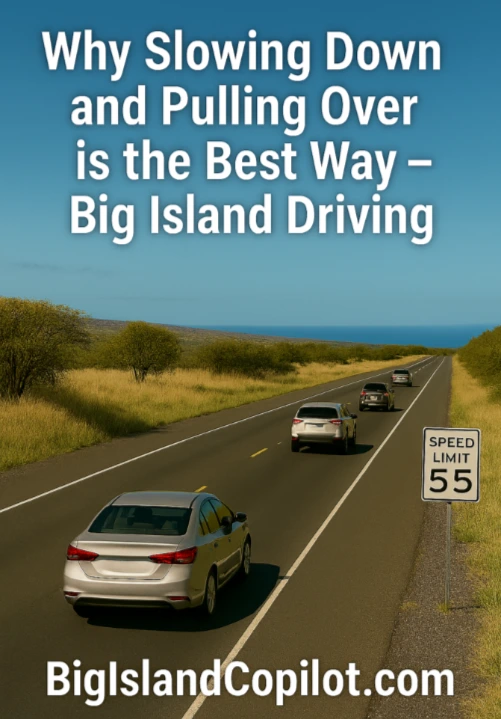
Big Island driving — is a unique experience. This isn’t like navigating multi‑lane highways on the mainland. Most roads are two‑lane, twisty, and shared by residents going to work, business vehicles delivering goods, emergency responders, sightseers, cyclists, and pedestrians. Because there’s often only one main road connecting major destinations, the way you drive matters — not just for you, but for the safety and well-being of everyone on the road.
In this guide you’ll find why slowing down is smart and respectful, when and how to pull over, night driving tips, official safety statistics, real driver etiquette, and relevant official road and weather alert sources to help you stay safe and confident behind the wheel.
1. Big Island Driving – Road Reality 🛣️
Unlike larger cities with multi‑lane freeways, the Big Island’s transportation network consists mostly of single or two‑lane highways that meander through dramatic landscapes: volcanic terrain, valleys, steep inclines, ocean cliffs, and open desert‑like plains. A few key highways include:
- Hawaii Belt Road (Route 19 & 11): The main road circling the island.
- Queen Kaʻahumanu Highway: Popular coastal route with scenic views.
- Saddle Road (HI‑200): Cross‑island route that connects east and west sides.
Most of these roads have one lane in each direction, with limited shoulders and few opportunities to pass. That means slower vehicles, faster local traffic, and emergency responders share the same route.
2. Why Slowing Down is More Than Just a Courtesy
A. Safety First
Slower speeds give you more time to react to unexpected hazards like:
- Sharp curves or blind hills
- Wildlife or livestock crossing
- Pedestrians or cyclists near rural towns
- Sudden weather changes or rain slicks
Because the Big Island’s terrain is so varied, conditions can change rapidly — rain can make roads slick, and wind can blow debris onto the pavement. Slowing down gives you the margin you need to drive safely.
B. Shared Road Etiquette
The Big Island’s roads are used by:
- Locals commuting to work
- Delivery and service vehicles
- Emergency vehicles responding to calls
- Tourists unfamiliar with roads
When you intentionally slow down and pull over safely, you help:
- Locals get where they need to be
- Emergency vehicles respond more quickly
- Tourists behind you feel less pressured
- Overall traffic flow stays smooth
As one long‑time local put it: “Traffic here isn’t just a vacation problem — it’s part of daily life.”GoVibe
C. Reducing “Road Rage” and Frustration
Aggressive driving rarely resolves anything and increases risk. On narrow Big Island roads, slowing and pulling over prevents:
- Unsafe passing maneuvers
- Tailgating
- Escalated frustration between drivers
Staying calm and courteous makes for a safer experience for everyone.
3. When and How to Pull Over Properly 🚗
A. Emergency Vehicles (911 Response)
If you see or hear an emergency vehicle with sirens or lights:
- Pull over to the right at the nearest safe spot
- Wait until the vehicle has passed
This is not just courtesy — it’s required. Prompt action helps ambulances, fire trucks, and police reach people in need.
💡 Emergency contacts:
📞 911 — Police, Fire, Ambulance
📞 Hawaii County Police (non‑emergency): (808) 935‑3311
B. Faster Local Traffic
Local drivers — especially during morning and afternoon peak periods — often know the roads well and may need to travel faster. If someone approaches you closely from behind or if you have more than 5 cars (HI Law):
- Look for a wide shoulder or pull‑out
- Signal left, slow slightly, and safely move aside
- Let them pass to reduce frustration and risks
Be kind, even though it says five cars. If you are driving slowly and see more than 2 cars behind you, pull over and let them pass.
C. Scenic Pull‑outs & Viewpoints
Hawaiʻi Island has some truly breathtaking scenery. When stopping:
- Always use designated pull‑outs or scenic stop markers
- Never stop on blind curves or narrow shoulders
- Turn on your hazard lights while parked
Stopping safely lets you enjoy views without endangering yourself or others. There are many places to safely pull to the shoulder or parking areas to let local traffic pass by at their pace.
4. Real Safety Numbers That Matter 📊
Traffic safety on the Big Island — and across Hawaiʻi — is a serious concern. Understanding the statistics helps underline why slowing down and careful driving are vital.
Traffic Fatalities in Hawaiʻi
- In 2024, the state recorded 102 traffic fatalities, a 10% increase over the previous year. Big Island Now
- By October 2025, traffic deaths had already surpassed last year’s total with 106 deaths statewide. Hawaii Department of Transportation
- A report showed traffic fatalities increased by more than 100% in one period, with more crashes and deaths compared to the same span the previous year. https://www.hawaiinewsnow.com
- Speeding, failure to yield, and improper turns are common crash causes.
- Statewide initiatives like Vision Zero aim to eliminate road fatalities and severe injuries. Hawaii County
Something to Keep in Mind
Traffic deaths do not just involve drivers — they include pedestrians and cyclists as well. While statewide, rates per vehicle miles traveled have historically been lower than national averages in some reports, increases in fatal crashes show the ongoing need for safe driving.
5. Night Driving: Extra Caution After Dark 🌙
Night driving on the Big Island requires special awareness. Conditions change quickly once the sun sets, due to:
- Limited street lighting in rural areas
- Animals wandering onto roads
- Difficult visibility around curves
- Unlit intersections and driveways
It’s advisable to avoid night driving in rain or poor conditions when possible, especially on mountainous or coastal roads. The roads here are poorly marked, if marked at all, with little to no lighting. In dark, wet/rainy conditions, it is very hard to drive these narrow, winding roads.
Night Driving Tips
✔ Reduce speed more than you would during the day
✔ Use high beams when safe and appropriate
✔ Watch for reflective signs, animals, and pedestrians
✔ Take frequent breaks on longer drives
✔ Avoid distraction — one second off the road at night matters
6. Weather and Road Alert Resources 🌦️
Before you hit the road, it’s wise to check official road and weather conditions so you’re not caught off‑guard by closures, weather events, or construction.
Hawaii DOT & Road Conditions
The Hawaii Department of Transportation posts real‑time alerts and closures for state highway work and conditions:
👉 Lane Closure Map & Roadwork Updates — official info from HDOT. Hawaii Department of Transportation
Weather Traffic & Alerts
Weather events can significantly impact roads, especially in valleys, mountain passes, and coastal areas. Alerts include flood watches, hazard warnings, and evacuation notices:
👉 Weather Related Traffic Alerts — Hawaiʻi DOT. Hawaii Department of Transportation
County Alerts
You can also register for county alert systems (text/emails) to receive notifications About road closures, severe weather, and hazards. Hawaii.gov
7. Practical Tips for Daily Driving on the Big Island 🛻
Plan Your Routes
Use updated navigation and official alert sites:
- Google Maps or Apple Maps for turn‑by‑turn
- The HDOT lane closure map before longer trips
Check Before You Go
- Especially before sunrise or night travel
- Before heading to remote areas like Mauna Kea, Volcano, or Saddle Road
Carry Essentials
- Water and snacks
- First aid kit
- Flashlight
- Fully charged phone
Respect Local Traffic Culture
Honking without reason is frowned upon and considered aggressive. Steady courteous driving and using pull‑outs for faster traffic is understood and appreciated here.
8. Why This Matters: Respect for the Land and People ❤️
Driving safely and respectfully isn’t just about obeying rules — it’s a reflection of respect for:
- The land (fragile ecosystems and steep cliff roads)
- The community (locals who rely on these roads daily)
- Emergency responders who serve everyone
- Your own vacation experience
Slowing down allows you to arrive safely, enjoy the incredible scenery, and leave a positive impact on the island and its people.
9. Be Part of the Solution 🚘🌺
| Key Action | Why It Matters |
|---|---|
| Slow down | Gives you reaction time and prevents crashes |
| Use pull‑outs | Keeps traffic flowing and reduces frustration |
| Check alerts | Avoid surprises like closures or weather hazards |
| Be courteous | Traffic here is shared — locals and visitors alike |
| Prepare for night driving | Limited lighting and animals are common |
Every time you choose safety over speed, you’re making the roads better for everyone — including yourself.
⚠️ Quick Safety Reminder
Conditions can change suddenly. Always check local conditions, warnings, and official guidance before entering the ocean, lava areas, or trails. Safety is your responsibility.
Aloha, did you like this page?