
⚠️ Big Island Safety Notice
The Big Island’s environment can change rapidly — ocean conditions, lava flows, weather, and trails may become dangerous without warning. This guide is for educational purposes only and does not replace real-time assessments, posted warnings, or professional guidance. Always check current conditions before entering the water, hiking, or exploring, and do not proceed if conditions appear unsafe — even if a location is described as “safer.”
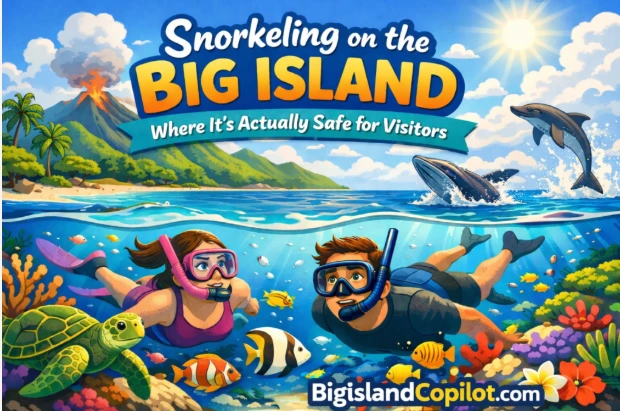
Snorkeling on the Big Island can be incredible — but it’s also one of the most misunderstood and underestimated activities visitors attempt. The Big Island is not an easy snorkel destination; many injuries, rescues, and near-misses happen because people forget beaches change day-to-day and assume all beaches are safe, calm, beginner-friendly, and look like the photos online.
This guide focuses on where snorkeling is actually safe for visitors, why certain spots are safer than others, and how to realistically assess conditions — not hype.
Snorkeling on the Big Island – Safety Is Different
The Big Island has:
- Steep offshore drop-offs
- Fewer fringing reefs
- Strong currents and surge
- Limited sandy-entry beaches
- Rapidly changing conditions
Unlike Oʻahu or Maui, many Big Island snorkel spots go from shallow to deep very quickly, and calm mornings can turn rough within minutes.
If you choose the right locations, snorkeling can be safe and unforgettable. If you choose the wrong ones, it can become dangerous fast. Following ocean safety rules saves lives.
What Makes a Snorkel Spot “Actually Safe”
A safer snorkel location typically has:
- Natural protection from swell (bays, coves)
- Gradual entry with lava shelves or sand
- Minimal boat traffic
- Historically calm morning conditions
- Clear exit points
No spot is ever risk-free — but these features reduce danger significantly.
Safest Snorkeling Areas on the Big Island (By Region)
These locations are not just safer snorkeling areas — they are places with deep cultural history, long-standing Hawaiian use, and natural geography that makes calmer conditions more likely when the ocean cooperates.
Kealakekua Bay (South Kona)
Kealakekua Bay is widely considered the single best snorkeling location on the Big Island when conditions are calm.
Why it’s safer:
- Large, naturally protected bay
- Limited swell penetration on calm days
- Exceptional visibility due to depth and minimal sand
Hawaiian history:
Kealakekua means “the pathway of the god.” The bay was a major religious and political center in ancient Hawaiʻi and is closely associated with Hawaiian aliʻi (chiefs). It is also where Captain James Cook was killed in 1779, marking a turning point in Hawaiian history.
Important reality:
This is a marine life conservation district. Shore access requires a long hike or kayak; many visitors choose permitted boat tours.
Map link:
https://maps.google.com/?q=Kealakekua+Bay
Hōnaunau Bay (Two Step, South Kona)
Often called “Two Step,” this is one of the most consistently safe snorkel entries on the island.
Why it’s safer:
- Natural lava rock steps for entry and exit
- Protection from many swell directions
- Clear water close to shore
Hawaiian history:
The bay sits next to Puʻuhonua o Hōnaunau, a sacred place of refuge. In ancient times, those who broke kapu (law) could flee here for forgiveness and protection. The area remains culturally significant today.
Map link:
https://maps.google.com/?q=Honaunau+Bay+Two+Step
Kahaluʻu Beach Park (Kona)
The best beginner-friendly snorkeling beach on the Big Island.
Why it’s safer:
- Lifeguards on duty
- Shallow, partially enclosed reef
- Sand-bottom entry
Hawaiian history:
Kahaluʻu was once a thriving coastal village with fishponds, temples (heiau), and agricultural areas. Today, education programs here emphasize reef protection and mālama ʻāina (care for the land).
Map link:
https://maps.google.com/?q=Kahaluu+Beach+Park
Keauhou Bay (South Kona)
Keauhou Bay offers calmer water than many open-coast areas and is often overlooked for snorkeling.
Why it’s safer:
- Naturally sheltered bay
- Gentle slopes near shore
- Minimal wave rebound
Hawaiian history:
Keauhou is the birthplace of King Kamehameha III, one of Hawaiʻi’s most influential monarchs. The area has long been used for fishing and ocean travel.
Map link:
https://maps.google.com/?q=Keauhou+Bay+Kona
Puʻuhonua o Hōnaunau (Nearshore Snorkeling Areas)
This area offers gentle, nearshore snorkeling when conditions are calm, paired with one of the most culturally significant landscapes in Hawaiʻi.
📍 Snorkeling Map Callouts (Puʻuhonua o Hōnaunau Area)
- Puʻuhonua o Hōnaunau National Historical Park (Cultural Site)
https://maps.google.com/?q=Puuhonua+o+Honaunau+National+Historical+Park
Snorkeling is NOT permitted inside sacred areas. Visit for history first, snorkel only outside designated boundaries. - Nearshore Lava Shelf (Outside Park Boundary)
https://maps.google.com/?q=Puuhonua+o+Honaunau+snorkeling
Shallow reef pockets with small reef fish; best in calm morning conditions. - Hōnaunau Boat Ramp Area
https://maps.google.com/?q=Honaunau+Boat+Ramp
Often calmer water with clearer entry/exit; popular for relaxed swims when swell is low. - Two Step (Hōnaunau Bay)
https://maps.google.com/?q=Honaunau+Bay+Two+Step
Located just north; frequently paired with a Puʻuhonua visit for more robust snorkeling.
What Snorkelers Commonly Experience Here
Visitors frequently describe this area as:
- Calm and unintimidating
- Best for relaxed, shallow snorkeling
- Less dramatic than Kealakekua Bay but more peaceful
- Ideal as a combined cultural + ocean stop rather than a stand-alone snorkel destination
Common online review themes mention small reef fish, occasional sea turtles, and easy exits — especially appreciated by beginners and cautious swimmers.
Hōnaunau Bay (Two Step)
One of the most reliable snorkel locations for visitors.
Why it’s safer:
- Easy lava-step entry
- Protected from many swell directions
- Clear water close to shore
- Frequent presence of other snorkelers
Map link:
https://maps.google.com/?q=Honaunau+Bay+Two+Step
Best time:
Early morning before winds increase.
Kahaluʻu Beach Park (Kona)
Best beginner-friendly snorkel spot on the island.
Why it’s safer:
- Lifeguards on duty
- Shallow reef area
- Sand-bottom entry
- Education signage
Map link:
https://maps.google.com/?q=Kahaluu+Beach+Park
Important reminder:
Stay inside the reef; conditions outside can be rough.
Keauhou Bay (Kona)
Often overlooked for daytime snorkeling.
Why it’s safer:
- Naturally protected bay
- Minimal surge
- Easy water access
Map link:
https://maps.google.com/?q=Keauhou+Bay+Kona
Puʻuhonua o Hōnaunau (Near Two Step)
Calm waters near shore with good visibility.
Map link:
https://maps.google.com/?q=Puuhonua+o+Honaunau
Note:
Respect cultural boundaries — snorkel only in allowed areas.
Spots That Look Safe — But Often Aren’t
South Point (Ka Lae)
Not recommended for visitors.
- Extremely strong currents
- Deep water immediately offshore
- No protected swim zones
Pololū Valley
Beautiful but dangerous.
- Strong shore break
- Powerful currents
- No lifeguards
Random Roadside Lava Entries
If there’s:
- No trail
- No signage
- No other snorkelers
…it’s usually unsafe.
When Snorkeling Is Safest (Timing Matters)
- Early morning (7–10am) is best
- Trade winds increase late morning
- Afternoon surge is common
- Winter months have higher risk
If it’s windy inland, it’s often rough offshore.
Seasonal Safety Considerations
Summer (May–September)
- Calmest conditions
- Best visibility
- Best for beginners
Winter (November–March)
- Higher swell
- Fewer safe days
- Stick to protected bays only
Essential Real-World Safety Rules
- Never snorkel alone
- Do not fight currents — float and signal
- Avoid snorkeling after rain (runoff reduces visibility)
- Wear fins for control
- If locals aren’t in the water, ask why
- Cell service disappears quickly in many areas on the Big Island.
Snorkel Tours vs Shore Entry (Which Is Safer?)
Boat tours can be safer because:
- Conditions are assessed by professionals
- Entry points are chosen carefully
- Safety staff are present
Shore entry is fine only at proven locations.
Which Snorkel Spot Is Right for You? (Quick Decision Table)
| If you are… | Best Snorkel Spot | Why It Fits | Map Link |
|---|---|---|---|
| A first-time snorkeler or nervous swimmer | Kahaluʻu Beach Park | Lifeguards, shallow reef, sandy entry | https://maps.google.com/?q=Kahaluu+Beach+Park |
| Traveling with kids or teens | Kahaluʻu Beach Park | Calm inner reef, easy exits | https://maps.google.com/?q=Kahaluu+Beach+Park |
| Wanting the best visibility and reef | Kealakekua Bay | Deep clear water, healthy reef | https://maps.google.com/?q=Kealakekua+Bay |
| A confident swimmer who wants easy entry | Two Step (Hōnaunau Bay) | Natural lava steps, reliable conditions | https://maps.google.com/?q=Honaunau+Bay+Two+Step |
| Looking for a calm, meaningful experience | Puʻuhonua o Hōnaunau (nearshore) | Gentle water + cultural setting | https://maps.google.com/?q=Puuhonua+o+Honaunau |
| Staying near resorts in South Kona | Keauhou Bay | Protected bay, minimal surge | https://maps.google.com/?q=Keauho u+Bay+Kona |
| Unsure About ocean conditions | Boat snorkel tour | Operator selects safest location | https://maps.google.com/?q=Kona+snorkel+tour |
Final Reality Check
The Big Island rewards respect, patience, and planning.
Snorkeling here is not about checking a box — it’s about choosing the right place, at the right time, under the right conditions.
If you do that, it can be one of the most meaningful ocean experiences anywhere in Hawaiʻi.
⚠️ Quick Safety Reminder
Conditions can change suddenly. Always check local conditions, warnings, and official guidance before entering the ocean, lava areas, or trails. Safety is your responsibility.
Outbound resource:
Hawaiʻi Ocean Safety – Snorkeling & Beach Safety Information
https://oceansafety.hawaii.gov/
Aloha, did you like this page?